
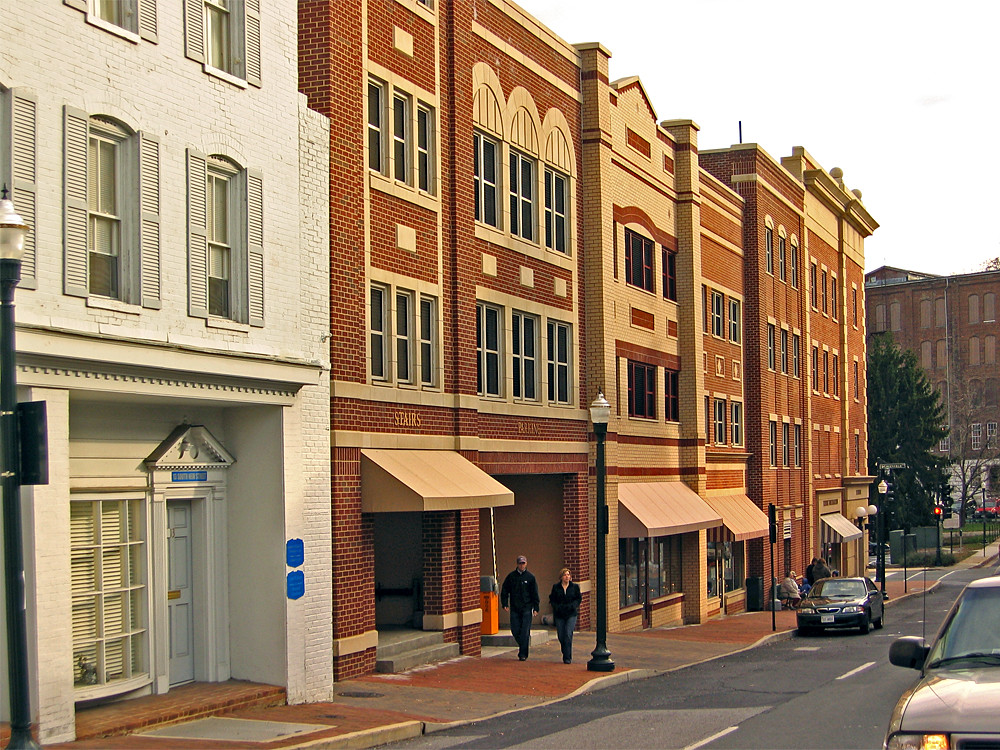
The brick lofts rising along Mill Street were supposed to include income-restricted apartments as a condition of the city's redevelopment deal for the site. A lawsuit filed this week claims the developer built far fewer than promised and has leased almost none of them to qualifying tenants.
The suit, filed in Wentworth County Superior Court on behalf of six Lowertown residents and the tenant-advocacy group Lowertown Tenant Alliance, targets Millrace Development Partners, the firm behind the 214-unit Foundry District Lofts project on the site of a former fastener plant. It alleges the developer agreed in its 2021 redevelopment agreement with the city to set aside 18 percent of units, or 38 apartments, as income-restricted, but has leased fewer than a dozen at qualifying rents nearly a year after the building opened its first phase.
“They got the tax abatement, they got the zoning variance, and now they want to pretend the affordable units were always aspirational,” said Denise Okonkwo-Marsh, the tenant alliance’s lead organizer and a named plaintiff in the suit. “There is nothing aspirational about a signed agreement.”
A pattern the city has seen before
City Council Member Terrence Boudreaux, who represents Lowertown and pushed for stricter affordable-housing enforcement language during last week’s vote on the city’s transit overhaul plan, said the lawsuit reflects a pattern he has watched play out across Foundry Row for years. “Every time one of these projects breaks ground, we get a beautiful rendering and a promise,” Boudreaux said. “By the time it’s built, the promise has quietly disappeared into a footnote.”
According to the complaint, Millrace Development Partners initially marketed 38 units as income-restricted on its leasing website when construction began, a figure that matched the redevelopment agreement filed with the city clerk’s office. By the time the first 140 units opened for occupancy, the website listed only 11 income-restricted apartments, with a company representative telling prospective tenants the rest had been “reclassified” due to financing changes.
I qualified for one of the affordable units under the terms they published two years ago. By the time I called to apply, I was told the program had been quote unquote restructured and there was nothing available in my income bracket.
Reyna Ostrowski, plaintiff and Lowertown resident
A spokesman for Millrace Development Partners, Aaron Kessler, disputed the tenants’ characterization, saying the project remains in compliance with its agreement once later construction phases are included. “Phase one was never intended to deliver the full affordable-unit count on its own,” Kessler said. “We remain committed to hitting the 38-unit target across the full build-out, and we think the record will bear that out.”
City housing office says it flagged the gap
City Council Member Aisha Muhammad, who chairs the council’s housing committee, said her office had raised concerns about the shortfall with the developer twice this year before the lawsuit was filed. “We sent two letters asking for a revised compliance timeline and got vague answers both times,” Muhammad said. “That’s part of why my committee pushed so hard to put teeth into the transit corridor’s housing requirements instead of relying on the honor system again.”
Muhammad said the city’s redevelopment agreements generally allow developers to phase affordable-unit delivery alongside market-rate construction but require the ratio to hold at each phase, not only at project completion. She said the city attorney’s office is reviewing whether Millrace’s phase-one numbers violated that requirement independent of the tenants’ lawsuit.
The dispute has drawn attention beyond Lowertown. Foundry Row has absorbed much of the city’s biotech-sector growth in recent years, with firms including Kestrel Biologics and the startups housed at the Forge Bellwater incubator drawing higher-earning workers into a neighborhood that abuts Lowertown’s more modest rental housing stock. Rents in the immediate area have risen roughly 34 percent over the past three years, according to figures the tenant alliance cited from its own survey of area listings.
“This isn’t an abstract fight about paperwork,” said Okonkwo-Marsh. “Every unit that doesn’t get delivered as promised is a family that gets pushed further out, maybe out of the neighborhood entirely.”
What happens next
A hearing on the tenants’ request for a preliminary injunction, which would bar Millrace from leasing additional market-rate units until it produces a revised compliance plan, is expected within roughly six weeks. Kessler said the company intends to contest the injunction request but declined to say whether it would revise its published affordable-unit timeline in the meantime.
Boudreaux said he plans to raise the case at an upcoming council committee meeting regardless of the litigation’s outcome, arguing the city needs a standing enforcement mechanism rather than relying on tenants to sue developers who fall short. “We shouldn’t need six people to hire a lawyer every time a developer decides a promise was optional,” he said. “That’s on us to fix, not just on them to keep breaking.”
Muhammad said her committee would review Foundry Row’s other pending redevelopment agreements over the next month to check for similar phased-compliance gaps, calling the Foundry District Lofts case “a warning shot for every other project in that pipeline.”
For now, the six named plaintiffs remain in their current apartments, several of them a short walk from the loft building’s ground-floor retail space, which has sat mostly vacant since opening. Okonkwo-Marsh said the alliance has fielded calls from a dozen additional Lowertown households since the suit was filed, some describing similar experiences applying for income-restricted units elsewhere in Foundry Row.
“We picked this building because the paper trail was the clearest,” she said. “But if the court finds in our favor, we intend to look hard at whether the same thing has happened at other sites along Mill Street.” Kessler said Millrace had not been contacted about any additional claims and maintained that the company’s overall affordable-housing record in Bellwater “speaks for itself.”