
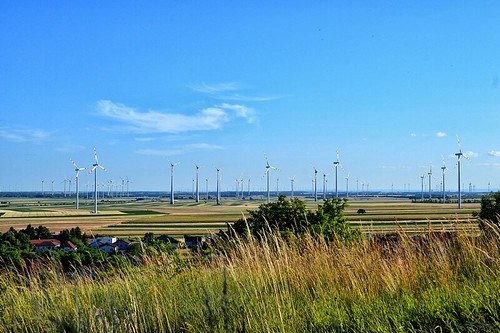
For years, Bellwater Turbine Works has sold its wind-turbine components exclusively to domestic developers. That changes this fall, when the first shipment under the company's inaugural export contract leaves its Foundry Row-adjacent plant bound for a wind farm north of the border.
The three-year contract, with a Canadian wind-energy developer the company declined to name citing a non-disclosure agreement, calls for Bellwater Turbine Works to supply turbine nacelle components for a wind farm under construction in that country, according to Chief Executive Marion Petrakis. She said the deal is worth an estimated $22 million over its term and represents the company’s first sale outside domestic markets since it converted part of the former Bellwater Steel & Fastener Co. plant into a wind-component manufacturing facility.
A milestone years in the making
“We’ve been telling ourselves for years that our components could compete internationally on quality, and now we finally have a customer who agreed and put money behind it,” Petrakis said. “This isn’t just a nice contract. It’s proof to every other buyer we talk to that a company built out of an old steel plant in Bellwater can hold its own against manufacturers with a lot more history in this specific market.”
Mayor Renata Ibarra called the export deal a milestone for the city’s broader green-energy manufacturing ambitions, noting that Turbine Works has become a frequent example in her office’s pitches to prospective clean-energy employers. “When we tell other companies that Bellwater can build world-class manufacturing on the bones of its old factories, we finally have an international contract to point to instead of just a hope,” Ibarra said.
This isn’t just a nice contract. It’s proof to every other buyer we talk to that a company built out of an old steel plant in Bellwater can hold its own internationally.
Marion Petrakis, CEO, Bellwater Turbine Works
The hiring problem hasn’t gone away
Petrakis said fulfilling the contract will require adding roughly 35 positions to the plant’s current workforce of about 210, on top of positions the company has struggled to fill for more than a year. The company has previously discussed its difficulty finding workers trained in the specialized welding and precision-assembly skills the components require, a gap it has partly addressed through an apprenticeship program launched with Bellwater State University.
Dr. Samuel Iyer, the Bellwater State labor economist who studies the region’s manufacturing workforce, said the export deal raises the stakes on a skills gap that has already constrained the company’s growth. “An export contract with a fixed delivery schedule doesn’t care whether you’ve found enough welders,” Iyer said. “If Turbine Works can’t staff up fast enough, this becomes less a triumph and more a stress test of everything the region has done, or hasn’t done, to train manufacturing workers over the past several years.”
Petrakis said the company has accelerated recruitment for the new positions and is in discussions to expand its apprenticeship cohort size, though she declined to specify a timeline for reaching full staffing. She said the company is prioritizing hiring from Cedar Hollow and Lowertown, neighborhoods that supplied much of the workforce for the original steel plant before its decline.
Council Member Denise Okafor, who represents West Bellwater, home to much of the city’s newer green-energy manufacturing, said she has pushed for the community college’s West Bellwater campus to expand its welding and precision-manufacturing course offerings specifically to support companies like Turbine Works. “We can celebrate an export deal all we want, but if the training pipeline doesn’t keep pace, the next company that wants to do business with us is going to ask why we couldn’t staff up fast enough for the last one,” Okafor said.
Petrakis said the company is also exploring additional export opportunities in European markets, though she cautioned those conversations remain preliminary and contingent on successfully fulfilling the Canadian contract first. “We don’t want to be the company that oversold its own capacity,” she said. “Getting this first shipment out the door on schedule matters more to our reputation than signing a second deal right now.”
- Three-year export contract worth an estimated $22 million
- First shipment scheduled to leave the plant this fall
- Company plans to add roughly 35 positions to fulfill the contract
- Hiring focus includes Cedar Hollow and Lowertown residents
The first components under the contract are scheduled to ship this fall, with the full order fulfilled over the following two years. Petrakis said the company plans to mark the first shipment with an event for plant employees, many of whom previously worked at the original steel plant before its closure. “A lot of the people on that floor remember when this building made fasteners for a market that dried up,” she said. “Watching it ship turbine parts overseas is going to mean something to them that it might not mean to anybody outside Bellwater.”
Nakamura said the export deal has already generated interest from other domestic manufacturers exploring whether Bellwater’s revitalized industrial base could support their own supply chains, calls she said her office has fielded at a noticeably higher rate since the contract became public. “An export deal is a very specific kind of proof point,” Nakamura said. “It tells other companies that this city’s manufacturing quality can pass an international buyer’s inspection, not just a domestic one, and that distinction matters more than people might expect in these conversations.”