
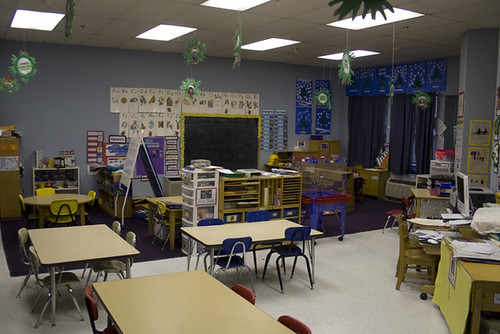
Three years ago, Riverbend Elementary School served barely 300 students, most of them from the working-class blocks north of the old fastener plants. This fall its hallways are crowded with nearly 460 kids, and the district has redrawn its attendance map to match.
The board voted 3-2 to move the boundary line along the Mill Street corridor, pulling roughly 240 students out of Wentworth Elementary’s zone and into Riverbend Elementary’s beginning next school year. Superintendent Dr. Yvonne Carrick told the board the change was overdue: Riverbend’s enrollment has climbed from about 310 students three years ago to nearly 460 this fall, a 48 percent increase, while Wentworth’s has fallen from roughly 520 to 410 over the same period.
“We have a school running two grades over capacity in trailers and a school four blocks away with empty classrooms,” Carrick said. “At some point the map has to reflect where the children actually live, not where they lived a decade ago.”
A neighborhood transformed
Foundry Row’s population of school-age children was negligible a decade ago, when the district last redrew boundaries in the area. The neighborhood was dominated by shuttered factories and a handful of longtime residents whose children had grown and moved away. The arrival of Kestrel Biologics, Forge Bellwater’s startup tenants and the first phase of the Foundry District Lofts has changed that math, drawing young professionals and, increasingly, young families who can afford the neighborhood’s rising rents.
Diana Howell moved into a two-bedroom unit in the Foundry District Lofts last year with her husband, a lab technician at a Foundry Row biotech firm, and their two children. She said she chose the building partly because Riverbend Elementary was a five-minute walk away. “We didn’t even look at Wentworth’s boundary map until after we signed the lease,” Castillo said. “We just assumed our kids would go to the school in our neighborhood. It turned out that wasn’t automatically true until this vote.”
Lowertown families feel the loss
Not everyone welcomed the change. Tasha Whitmore, whose two children currently attend Wentworth Elementary and live on a Mill Street block that falls on the Riverbend side of the new line, said she worried about her kids being pulled away from a school where they have friends, teachers and after-school programs they know. “My daughter has been at Wentworth since kindergarten,” Whitmore said. “Now, because of where a line got drawn, she’s supposed to start over at a new school for her last two years of elementary.”
We tried to build in exceptions for families with children already enrolled, but we can’t grandfather in every household without making the capacity problem at Riverbend worse instead of better.
Melissa Overby, Chair, Bellwater School Board
Board Chair Melissa Overby, who voted for the change alongside Carrick’s recommendation, said the district ultimately allowed a one-year grandfather exception for students entering their final year at either school, but not for younger children who would otherwise attend Wentworth for several more years. Two board members voted against the plan, arguing the district should have delayed a year to study a boundary that split fewer existing households.
Council members watching the broader pattern
City Council Member Luis Bettencourt, whose District 5 covers most of Foundry Row, said the boundary fight was a smaller-scale version of the tension his constituents have raised for years over the neighborhood’s redevelopment and an ongoing lawsuit over affordable units at the Foundry District Lofts. “Every time a new building fills up, it changes something else downstream, whether that’s a bus route, a grocery store or, in this case, a school boundary,” Bettencourt said. “The families moving in aren’t wrong to want a nearby school. The families who were already here aren’t wrong to feel like the ground is shifting under them.”
Carrick said the district is exploring adding two portable classrooms at Riverbend for the coming school year while it studies whether a longer-term capacity expansion, potentially a wing addition, would be justified if Foundry Row’s population keeps growing at its current pace. She said the district plans to revisit the boundary again in three years rather than waiting for another decade-long gap between the map and the neighborhood.
For now, the rezoning affects only elementary boundaries. Carrick said middle and high school zones remain unchanged, though she acknowledged the same pressures could eventually reach Bellwater’s secondary schools if Foundry Row’s family population continues to grow at anything like its current rate.
A pattern district officials expect to repeat
District demographer Owen Kessler, who compiled the enrollment projections the board relied on Tuesday, said Foundry Row is very likely the first of several boundary fights the district will face as redevelopment continues to reshape where families with young children choose to live. He pointed to early enrollment growth signals in parts of Riverside Heights, where a smaller-scale apartment conversion has begun drawing young families, as an area the district is already monitoring for a similar mismatch within the next few years.
“Foundry Row moved the fastest because the redevelopment there moved the fastest,” Kessler said. “But we built this projection model specifically because we don’t want to be caught flat-footed again. If Riverside Heights follows a similar growth curve, we’d rather adjust the boundary a year early than four years late the way we did here.”
Whitmore, the Wentworth Elementary parent whose children will move to Riverbend under the new lines, said she understood the demographic logic even as she remained unhappy about the timing. “I’m not saying the district got the math wrong,” she said. “I’m saying it would have been nice to have more warning, and more say, before a decision like this landed on my kids specifically.”
- Riverbend Elementary enrollment: about 310 students three years ago, nearly 460 this fall
- Wentworth Elementary enrollment: about 520 students three years ago, roughly 410 this fall
- Students affected by the rezoning: approximately 240
- Board vote: 3-2 in favor, with a one-year grandfather exception for students in their final year