
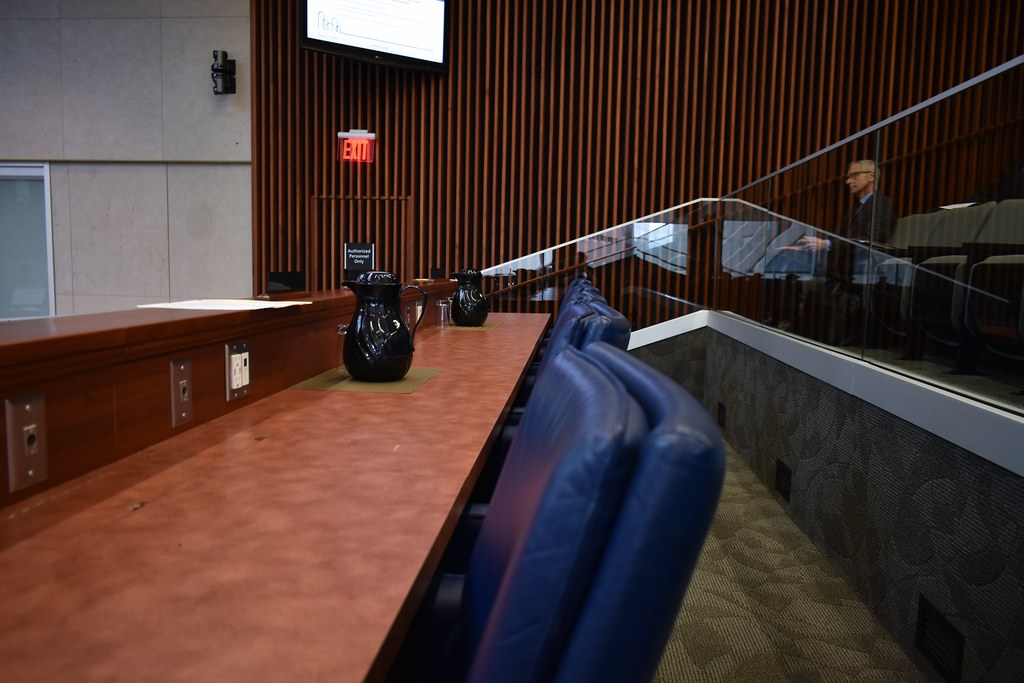
Bellwater's city council began its annual budget process Tuesday under a cloud, as City Manager Marcus Whitfield told members that flat state aid and rising fixed costs have opened an $18.6 million hole in next year's spending plan, even as the biotech boom continues to pad city tax rolls.
Whitfield’s office presented council members with a preliminary budget outlook projecting $18.6 million more in expenses than revenue for the coming fiscal year absent any changes, a gap driven primarily by a 9 percent increase in the city’s required pension contribution and an 11 percent rise in employee health insurance premiums. Those increases, Whitfield said, are landing at the same time state aid to the city has remained flat for a third straight year.
“We are not in a crisis, but we are not in a position to fund everything everyone would like funded,” Whitfield told the council. “The choices this year are going to be about priorities, not just arithmetic.” Last year’s approved budget totaled $398.4 million; Whitfield’s office is targeting a budget in a similar range once cuts and new revenue are factored in, though he cautioned the final figure would depend on decisions the council has not yet made.
Biotech growth softens, doesn’t solve, the gap
Whitfield’s budget office is projecting property and payroll tax revenue tied to Foundry Row’s biotech cluster to grow by roughly 22 percent this year, a figure budget director Priya Ramaswamy attributed largely to new hiring following Kestrel Biologics’ recent $64 million funding round and continued expansion at smaller firms in the district. “That growth is real, and it’s helping,” Ramaswamy said. “But it’s about $6 million in additional revenue against an $18.6 million gap. It closes a third of the hole, not all of it.”
People hear “biotech boom” and assume the budget problem is solved. It helps enormously, more than almost anything else in this budget. It just isn’t large enough yet to cover pension costs that were set in motion a decade before any of us worked here.
Priya Ramaswamy, Bellwater Budget Director
Mayor Renata Ibarra, who is running for a third term this cycle, said she wanted the budget process to protect public safety staffing and treatment funding even if it meant deeper cuts elsewhere. “I don’t want a budget that balances the books by hollowing out the departments people rely on most,” Ibarra said. “There is room to find savings in places that don’t touch residents directly first.”
Council members stake out early positions
Council Member Gary Petrowski, who represents Cedar Hollow, said he was already worried the gap would be used as an excuse to slow-walk addiction treatment funding his district has pushed for over multiple budget cycles. “Every year it’s the same story: there’s no money for treatment programs, but there’s always money for something downtown,” Petrowski said. “I want to see the whole list of what’s on the table before I accept that treatment funding has to be what gets squeezed.”
Council Member Aisha Muhammad, who chairs the housing committee, said she would push to protect funding for affordable-housing enforcement staff added after last year’s transit corridor vote, which requires income-restricted units near new transit stops. “We just wrote new affordable-housing rules into law,” Muhammad said. “If we don’t fund the staff to enforce them, we’ve done nothing but pass a nice-sounding ordinance.”
Whitfield’s office flagged the police department’s budget request as one of the largest pressure points in this year’s process, a signal that is likely to sharpen debate in the coming weeks over staffing, overtime and community policing funding. Council President Walter Kowalczyk said he expected that fight, along with disagreements over Lowertown reinvestment funding, to dominate the six weeks of hearings ahead. “Nobody walks away from this process getting everything they asked for,” Kowalczyk said. “The question is whether we walk away with a budget that actually reflects our priorities or one that just happened to us.”
Whitfield said his office would present a detailed line-item budget proposal to the council within three weeks, followed by a series of public hearings before a final vote expected before the new fiscal year begins. He urged council members and residents to bring specific alternatives rather than general objections. “I can’t cut a gap that size by trimming supply budgets,” he said. “If people want to protect a specific program, I need to hear what they’d cut instead, not just what they’d save.”
Ramaswamy said her office would also present council members with several one-time revenue options, including drawing down a portion of the city’s reserve fund, though she cautioned against relying too heavily on reserves given the recurring nature of the pension and health care cost increases. “A one-time fix for a permanent problem just moves the same conversation to next year,” she said. “I’d rather we have an honest fight about priorities now than a bigger one in twelve months.”