
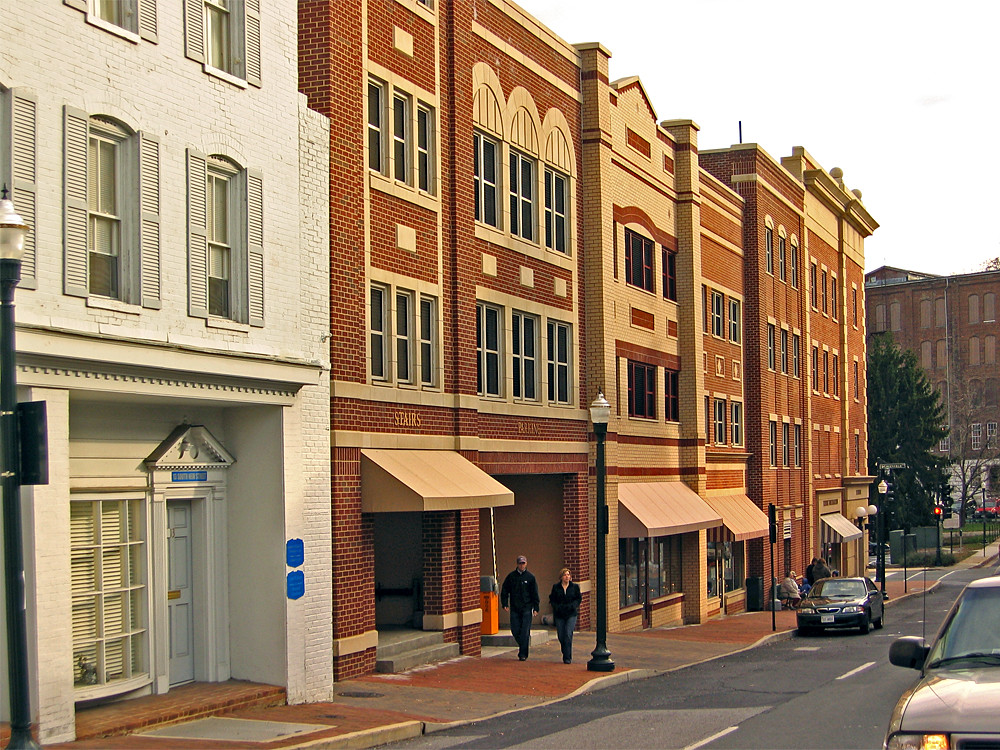
The Bellwater City Council voted 6-1 Tuesday to approve Council Member Patricia Yoon's vacancy-tax ordinance for long-empty Vale Avenue storefronts, capping weeks of debate with amendments meant to keep landlords from passing the new fee on to future tenants.
The final ordinance keeps the fee structure Yoon originally proposed, a $500 monthly fee starting after six months of vacancy that rises to $1,500 a month after a full year, but adds language requiring landlords to certify that any new lease signed within 18 months of paying the fee does not include a rent increase attributable to it. Violating that certification would expose an owner to a civil penalty on top of the vacancy fee itself.
“This is the amendment that got me to yes,” said Council Member Luis Bettencourt, who had withheld support at the earlier hearing over concerns landlords would simply build the fee into future rents. “I still think we’ll need to watch how this plays out in practice, but I believe the certification requirement gives us a real tool if landlords try to game it.”
A win Yoon has pursued for years
Yoon, who represents downtown’s District 1 and has pushed some version of the ordinance since her first year on the council, called the vote validation of years of work. “I’ve had property owners tell me for two years that this problem would fix itself if we just waited,” Yoon said. “Waiting got us six long-term vacancies on one block of Vale Avenue. I’m glad we finally decided to do something instead of hoping.”
This ordinance won’t fill every empty storefront overnight, and I’ve never claimed it would. What it does is remove the incentive to just sit on a space indefinitely waiting for a perfect tenant, and it puts real money into a grant fund for the small businesses trying to move in.
Patricia Yoon, City Council Member, District 1 (Downtown Core)
Warren Buckley, the Vale Avenue property owner who testified against the ordinance at the earlier hearing, said he remained opposed but acknowledged the certification requirement addressed his biggest concern about compounding costs onto renters. “I still think this fee is unfair to owners dealing with a soft retail market we didn’t create,” Stennis said. “At least this version doesn’t pretend the answer is to squeeze it out of the next small business that walks in.”
One no vote, citing scope
Council Member Denise Okafor cast the lone dissenting vote, repeating her concern from the earlier hearing that the ordinance should apply citywide rather than singling out one commercial corridor. “I don’t disagree that vacant storefronts are a problem,” Okafor said. “I disagree with writing a law that only addresses it on one street when West Bellwater has its own struggling retail strips that got no consideration in this ordinance.”
Yoon said she was open to a future citywide expansion once the city had data on how the Vale Avenue version performed. “I’d rather prove this works on one corridor with the most acute problem before we scale it up,” she said. “If Councilwoman Okafor wants to bring West Bellwater’s vacancy data to me, I’ll happily look at extending this.”
City Manager Marcus Whitfield said implementation would begin within 60 days, with the city’s business licensing office responsible for tracking vacancy duration and issuing notices before the fee takes effect on any qualifying property. He estimated the ordinance would generate roughly $240,000 in its first year, money that will flow into a small-business grant fund administered jointly by his office and the Bellwater Chamber of Commerce.
Theresa Nakamura, the chamber’s executive director, said her organization would help publicize the grant fund to prospective tenants once the fee structure takes effect. “Our members were split on this ordinance right up until the vote,” Nakamura said. “Now that it’s law, our job is making sure the grant money actually reaches small businesses trying to open on Vale Avenue, because that’s the part everyone agreed was worth doing.”
Council President Walter Kowalczyk, who presided over both hearings, said he expected the council to revisit the ordinance’s performance in about a year. “If storefronts are filling up and the grant fund is working, we’ll know this was worth the fight,” Kowalczyk said. “If it isn’t, we’ll have real data to fix it instead of just arguing from anecdotes the way we have been.”
A manager at Ledger & Leaf Books, the independent bookstore that has anchored Vale Avenue for two decades, said she hoped the grant fund would help attract tenants to the block’s most stubborn vacancies rather than simply subsidizing businesses that would have opened anyway. “We don’t need help filling storefronts with another bank branch or another vacant office suite,” she said. “I want to see this money go toward the kind of small, independent shop that makes people want to walk this street in the first place.”
Stennis said he intended to list his vacant property for a reduced asking rent within the coming weeks rather than pay the escalating fee, a decision he attributed directly to the ordinance’s passage even as he continued to object to it. “I still think this is the wrong way to solve the problem,” he said. “But I’m not going to pay a fine every month out of principle. If the city wants that space filled badly enough to tax me for leaving it empty, I’ll go find a tenant.”