
The Regal Theatre reopened downtown Saturday night with a sold-out performance of Foundry Stage Company's season opener, marking the end of a three-year, $8.2 million restoration that at several points threatened to run out of money before it ran out of problems to fix.
Executive Director Diane Marlowe stood at the top of the Regal Theatre’s restored marble staircase Saturday and watched ticket holders file in beneath a chandelier replica hung that same week, the last major piece of a project that had, by her count, blown through two budgets and one contractor before reaching a finish line. “There were nights in the last year where I genuinely did not know if we would open this season here or somewhere else,” Marlowe said. “Standing here tonight, watching people walk back into this building, makes every one of those nights worth it.”
Rot behind the curtain
The scope of the restoration grew considerably from what the theater’s board originally approved. Restoration architect Felix Draper said crews expected to handle cosmetic repairs to the lobby and seating when the project began, but a survey of the fly loft turned up corroded rigging that had not been fully inspected in decades, along with water intrusion that had quietly rotted sections of the roof decking above the proscenium arch. “Once we opened up that ceiling, the scope of the job basically doubled overnight,” Draper said. “We were no longer just polishing an old theater. We were making sure the building was structurally sound enough to keep operating at all.”
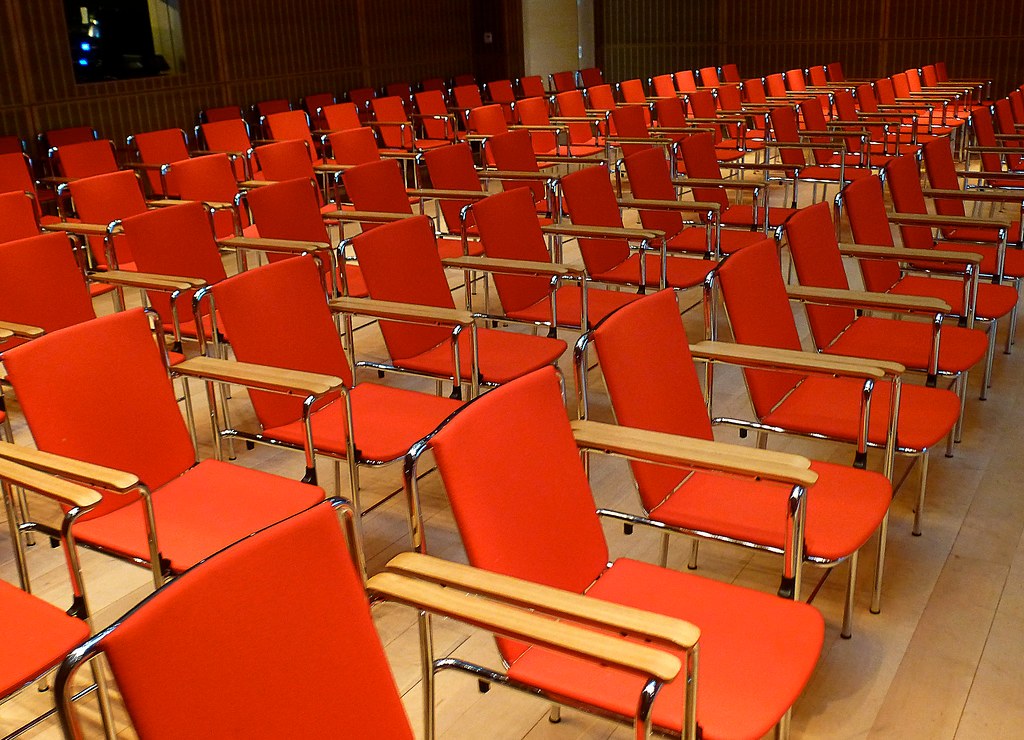
The restoration also reversed a decades-old change that had reduced the orchestra level’s seating from its original 640 seats to 580 in order to install wider seats. Draper’s team found a way to restore the full original seat count on the main floor while keeping modern legroom dimensions in the balcony, a compromise he said took nearly a year of design revisions to get right.
Paying for it
The final $8.2 million price tag was covered through a patchwork of financing: a $4.1 million bond the city council approved for the project, $2.6 million in state historic preservation tax credits tied to the building’s original architectural details, and a $1.5 million private fundraising campaign that ran longer than organizers hoped after the scope of the structural repairs became clear.
City Council Member Patricia Yoon, whose downtown district includes the theater, pushed for the bond financing and said she considers it money well spent for the surrounding business corridor. “Every storefront within two blocks of this theater benefits when there are twelve hundred people walking down Vale Avenue on a Saturday night looking for dinner before curtain,” Yoon said. “This wasn’t just an arts investment. It was a downtown investment.”
We almost lost this building to deferred maintenance nobody wanted to pay for until it became an emergency. The lesson I take from this whole process is that we can’t wait that long again.
Diane Marlowe, Executive Director, The Regal Theatre
Foundry Stage Company, the community theater troupe that has called the Regal its home stage for years, timed its new season around the reopening. Artistic Director Warren Pruitt said the company spent the past three years performing in borrowed spaces around the city, including a converted warehouse floor at Forge Bellwater, while waiting for its home stage to reopen. “You don’t realize how much a building shapes a company’s identity until you lose it for a while,” Pruitt said. “We’re a different, hungrier company for having gone through that, but there is nowhere else I wanted to open this season.” Pruitt said the company’s newly announced season was built specifically around showcasing the restored stage’s capabilities, including a rigging system finally rated to handle scenery drops the troupe had avoided using for years.
Not everyone in the audience Saturday was there for the first time. Constance Ridley, a 78-year-old subscriber who said she has held the same seat in row F for more than three decades, teared up describing the moment the house lights dimmed. “I watched my daughter’s dance recital on that stage, and years later I watched Foundry Stage put on shows I never thought a place like Bellwater would get to see,” Ridley said. “I was scared they’d tear the old girl down instead of fixing her. I’m glad somebody fought for her.”
Among the restored details unveiled this weekend:
- A hand-blown glass chandelier replica reconstructed from archival photographs of the original fixture
- A fully replaced HVAC system, addressing complaints about the theater’s inconsistent temperature that predated the restoration by years
- Restored dressing rooms and a widened backstage load-in area for touring productions
- A repainted and relit marquee visible from both ends of Vale Avenue
Bellwater Chamber of Commerce Executive Director Theresa Nakamura said her office is already fielding interest from restaurants and a boutique hotel developer eyeing storefronts near the theater, betting that a reliably open, functioning venue will draw steadier foot traffic than the theater’s uncertain closure ever allowed. “A dark marquee for three years is not exactly a selling point for a business owner deciding where to open,” Nakamura said. “A lit one, with a full house behind it most weekends, is a different conversation entirely.”
Marlowe said the theater’s board has already begun setting aside a portion of ticket revenue for a maintenance reserve fund, a step she said should have existed decades ago. “We built the plane while we were flying it this time,” she said. “Next time, we want the money in place before the roof starts leaking, not after.”