
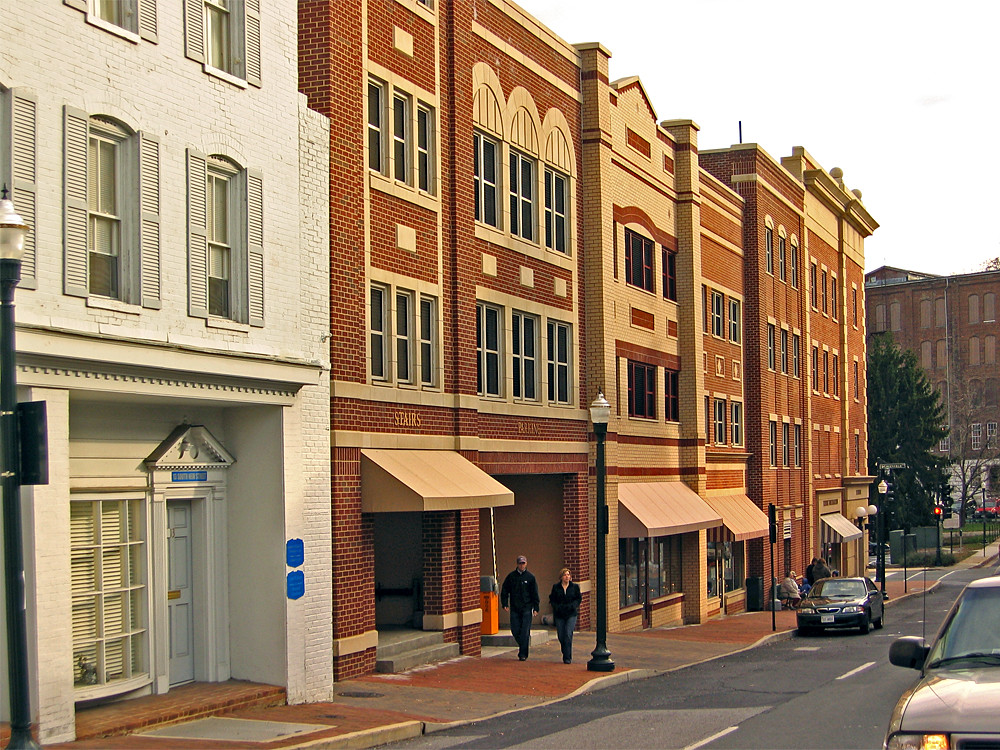
The city will begin accepting applications next month for a $2 million grant program aimed at filling empty storefronts along Vale Avenue, officials announced Tuesday, the latest attempt to address a vacancy rate that has hovered above 15 percent for much of the past two years.
The Downtown Storefront Revitalization Grant, funded through the city’s economic development office with an assist from the Bellwater Chamber of Commerce, will offer awards of $5,000 to $15,000 to cover build-out costs, signage and up to three months of rent for businesses opening in spaces that have sat vacant for 60 days or longer. City Manager Marcus Whitfield said the program targets roughly 14 of the 92 storefronts along the Vale Avenue corridor currently sitting empty, a vacancy rate near 15 percent that has stubbornly refused to budge even as biotech hiring has pumped new spending money into downtown.
A carrot instead of a stick
The grant program arrives roughly a year after Council Member Patricia Yoon’s proposal for a vacancy tax on landlords who leave storefronts empty for extended periods drew fierce pushback from property owners and ultimately passed in a scaled-back form. Yoon said she still believes penalties have a role to play, but welcomed the grant program as a complementary approach. “The tax was always meant to change behavior at the margins,” Yoon said. “This is meant to make it easier for somebody with a good idea and not much capital to actually open the door.”
Theresa Nakamura, executive director of the Bellwater Chamber of Commerce, which will help administer applications and connect prospective grant recipients with landlords, said the chamber pushed for the grant model after watching the vacancy-tax debate consume more than a year of council attention without emptying a single storefront. “We needed something that put money in a business owner’s hands this year, not a policy fight that might or might not change a landlord’s math five years from now,” Nakamura said.
We needed something that put money in a business owner’s hands this year, not a policy fight that might or might not change a landlord’s math five years from now.
Theresa Nakamura, Bellwater Chamber of Commerce
Applicants must show a signed lease or letter of intent, a business plan and proof they can cover ongoing rent after the grant-funded window closes. Whitfield said the city expects to fund between 20 and 30 grants in the program’s first year, with priority given to businesses that have not previously operated on Vale Avenue, a provision meant to guard against existing merchants simply relocating a few doors down to capture the money.
Landlords still holding out
Not everyone is convinced the grants address the real problem. Owen Pruitt, who has run a shoe-repair and leather-goods shop on Vale Avenue for eleven years, said the vacancies near his storefront persist less because entrepreneurs lack startup cash and more because landlords are holding out for tenants willing to pay rents pegged to Foundry Row’s biotech-fueled real estate market. “You can hand somebody $15,000, but if the landlord next door wants $38 a square foot for a space that was renting for $22 five years ago, that grant covers about four months and then they’re right back where they started,” Pruitt said.
Whitfield acknowledged the concern but said the city does not currently have the legal authority to cap commercial rents and considers the grant program the most direct lever available. “We can’t set what a landlord charges,” he said. “What we can do is lower the up-front cost of getting a business open, and hope that’s enough to tip some of these deals toward yes.”
Council Member Walter Kowalczyk, the council president, voted to approve the program’s funding but said he pressed staff during budget deliberations on how the $2 million allocation would be measured for success. “I don’t want to be back here in two years being told the vacancy rate is exactly where it was and the money is gone,” Kowalczyk said. “I was told we’d see quarterly vacancy figures, and I intend to hold them to it.”
The program’s funding draws in part from a bump in the city’s own recent storefront-vacancy tracking, which found the corridor’s vacancy rate had ticked down slightly from the prior year but remained well above pre-recession norms. Nakamura said her office has already fielded informal interest from several prospective tenants, including a bakery owner currently operating out of a commercial kitchen and a bookkeeper looking to open a small accounting practice.
- Grants range from $5,000 to $15,000 per storefront
- Applicants must show a signed lease or letter of intent
- Priority given to businesses new to the Vale Avenue corridor
- City expects to fund 20 to 30 grants in the program’s first year
Applications open next month through the Chamber’s website, with the first round of awards expected before the end of the quarter. Whitfield said the city plans to evaluate the program after its first year and could expand the pool of available money if demand outpaces the current $2 million allocation. “If this works the way we hope, the ask next year is going to be for more money, not less,” he said.
Pruitt said he intends to keep an open mind, even as he remains skeptical. “I’ve watched three different vacancy fixes come through this city since I opened my shop,” he said. “I’ll believe it when I see somebody actually move a truck into one of those empty spaces.”