
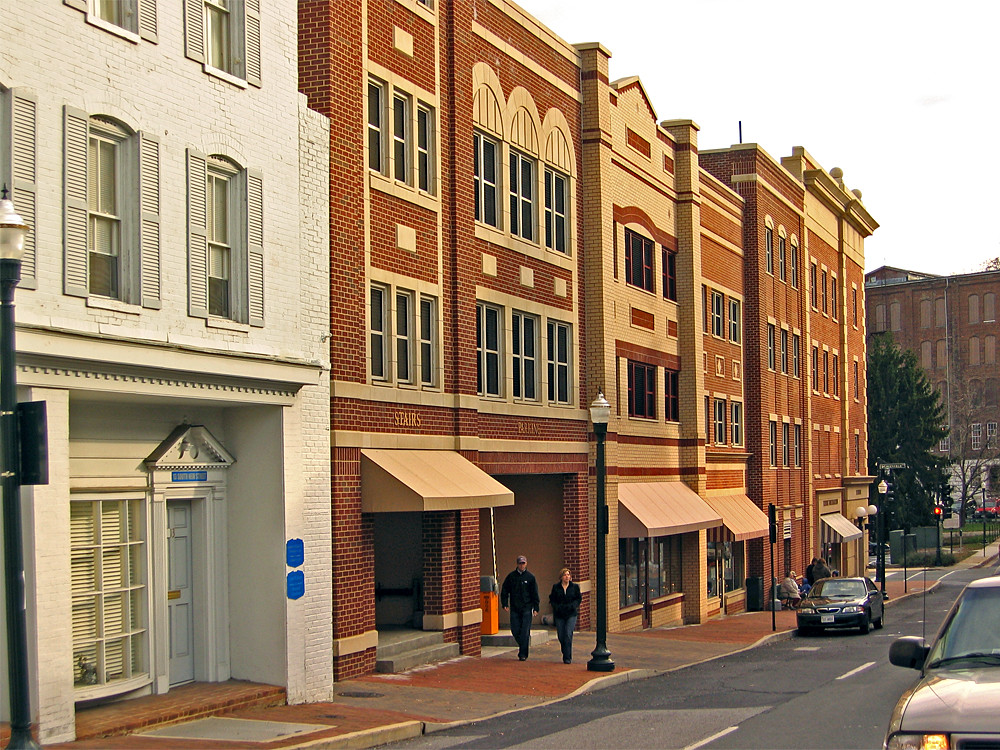
A proposed ordinance that would tax landlords for leaving Vale Avenue storefronts vacant for more than six months drew a packed and divided crowd to City Hall Tuesday night, as Council Member Patricia Yoon pushed a plan she says is overdue and downtown property owners called it punitive.
Yoon’s proposal would impose an escalating monthly fee on commercial property owners along Vale Avenue whose storefronts sit vacant for more than six months, starting at $500 a month and rising to $1,500 a month after a full year of vacancy, with exemptions for owners actively renovating a space or those who own no more than one commercial property in the district. Revenue from the fee would flow into a small-business grant fund intended to help new tenants cover build-out costs.
“I’ve watched the same six storefronts sit empty for two, three, four years while landlords wait for a tenant willing to pay rents that haven’t adjusted to what this street can actually support,” Yoon said. “This isn’t about punishing property owners. It’s about making sure holding a space empty has a cost, because right now it doesn’t, and Vale Avenue is paying for that in dead storefronts.”
Landlords call it punitive
Warren Buckley, who owns three commercial properties on Vale Avenue including one vacant for the past 18 months, told the council the ordinance would punish owners for market conditions beyond their control. “I would rent that space tomorrow to a tenant who could actually make the numbers work,” Stennis said. “Instead the city wants to fine me for the fact that retail rents downtown are still catching up from years of vacancies. That’s backwards.”
Nobody holds a storefront empty for fun. It costs the owner in lost rent every single month. What this ordinance assumes is that landlords are sitting on empty buildings out of stubbornness, when most of us are just waiting for a tenant we can actually get financing to support.
Warren Buckley, Vale Avenue Property Owner
Theresa Nakamura, executive director of the Bellwater Chamber of Commerce, said the business community was genuinely split on the proposal, with small retailers largely supportive and property owners largely opposed. “I don’t think there’s a version of this ordinance that makes both groups happy,” Nakamura said. “The honest answer is that both sides have a point. Vacant storefronts are a real problem, and some landlords are also being asked to absorb costs they didn’t create.”
Merchants say vacancies hurt everyone
Several small-business owners spoke in favor of the ordinance, arguing that clusters of empty storefronts discourage foot traffic and make the whole corridor less attractive to shoppers. A representative of Ledger & Leaf Books, the independent bookstore that has anchored Vale Avenue for two decades, said the vacancy fee’s grant fund could help attract exactly the kind of small retailers the street needs. “Every dark storefront next to us is a reason for a shopper to keep driving instead of parking,” the store’s manager told the council.
Council Member Luis Bettencourt, whose Foundry Row district has faced its own affordable-unit disputes with developers, said he was sympathetic to Yoon’s goal but wanted assurances the fee wouldn’t simply get passed through to future tenants in the form of higher asking rents. “I don’t want us to solve one problem and create a new one,” Bettencourt said. “I’d like language that prevents landlords from just building this fee into what they charge the next tenant.”
Council Member Denise Okafor, whose West Bellwater district has few comparable commercial vacancies, questioned whether the ordinance should apply citywide rather than singling out Vale Avenue. “If empty storefronts are bad for a neighborhood, that’s true everywhere, not just downtown,” Okafor said. Yoon said she was open to expanding the ordinance in a future phase but wanted to start with the corridor facing the most acute problem.
Council President Walter Kowalczyk, who presided over the three-hour hearing, said the council would not vote Tuesday but directed staff to draft amendments addressing the rent pass-through concern before a final vote, expected within the next several weeks. “This ordinance is close to ready,” Kowalczyk said. “It isn’t there yet.”
City Manager Marcus Whitfield said his office estimated the ordinance, if adopted as drafted, would generate roughly $240,000 annually in its first year based on current vacancy data along Vale Avenue, though he cautioned the figure would fall as the ordinance succeeded in encouraging owners to fill spaces. “The goal of a fee like this isn’t to maximize revenue,” Whitfield said. “If it’s working, the revenue should go down over time, not up.”
Yoon said she expected to bring a revised version of the ordinance back to the full council within a month. “I’d rather take a few extra weeks and get the rent pass-through language right than rush a vote and have landlords find a loophole on day one,” she said.