
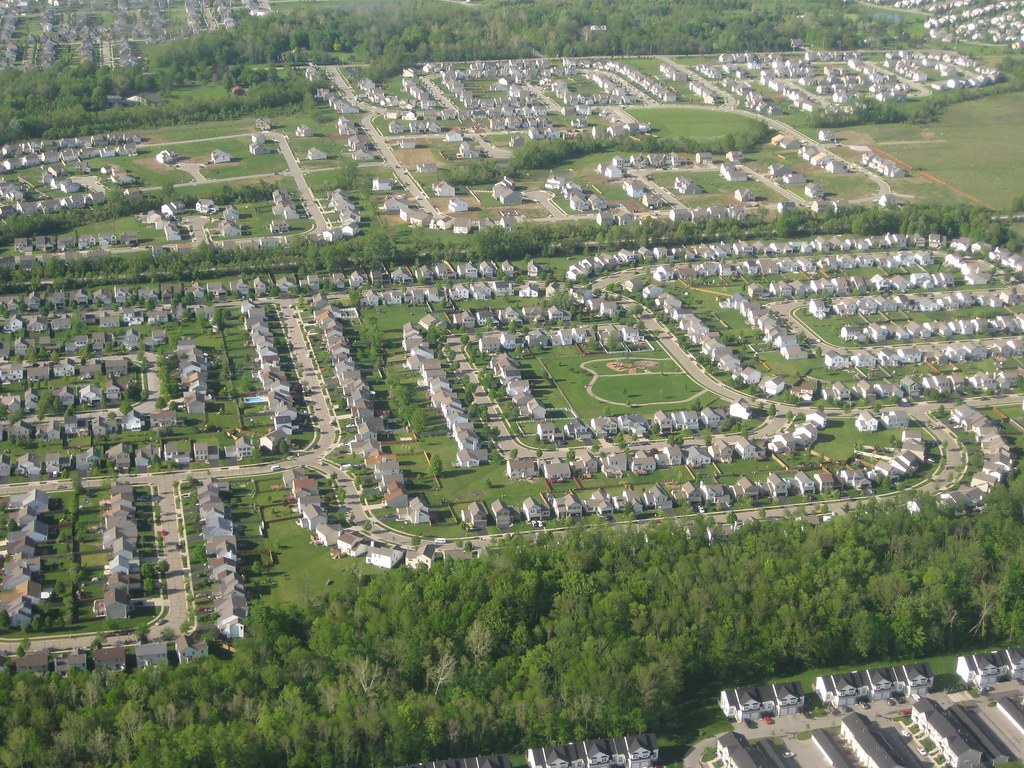
For more than a decade, a scattering of vacant lots in Cedar Hollow has sat behind chain-link fences, cleared of demolished houses but never rebuilt. A new city proposal would finally put them to use, funding affordable single-family and duplex homes rather than the large mixed-use developments reshaping other Bellwater neighborhoods.
City officials are drawing up plans to redevelop nine vacant lots scattered across Cedar Hollow into affordable infill housing, a proposal aimed at putting long-idle parcels back to use in a working-class neighborhood that has seen little of the investment reshaping Foundry Row and Riverside Heights.
The lots, most cleared of demolished houses more than a decade ago, sit scattered across roughly a dozen blocks near the Riverside Free Clinic. Under the proposal outlined by the city’s housing office, the parcels would be transferred to nonprofit developers to build single-family and duplex homes reserved for households earning up to 80 percent of the area median income, with priority given to longtime Cedar Hollow residents.
A different model than Foundry Row’s big projects
City Council Member Gary Petrowski, who represents Cedar Hollow, said the infill approach was deliberately designed to look different from the large mixed-use projects transforming other parts of the city. “Nobody in Cedar Hollow is asking for a six-story building with a rooftop deck,” Petrowski said. “They’re asking why the empty lot next to their house has had a chain-link fence around it for twelve years.”
The city’s housing director, Renata Okafor-Blume, said the scattered-site approach costs more per unit to build than a single large development but avoids concentrating new construction in ways that could displace existing residents or draw the kind of scrutiny recently focused on larger projects like the Foundry District Lofts. “These are small enough that a nonprofit developer can build one, sell or rent it to a qualifying family, and move to the next lot without ever needing to phase anything,” Okafor-Blume said.
The plan calls for an initial $6.2 million in city funding, drawn from a mix of federal community development block grant money and the city’s affordable-housing trust fund, to cover roughly 30 units across the first phase. City officials estimate a full build-out of all nine lots, plus roughly a dozen additional parcels identified in a follow-up survey, could add close to 60 homes over five years.
I’ve lived across from that lot for fifteen years. I’ve watched weeds grow taller than my fence and I’ve watched people ask why nothing gets built. If this is finally it, I want to see dirt moving, not another study.
Odell Ferris, Cedar Hollow homeowner near one of the proposed sites
Odell Ferris, who has lived across from one of the vacant lots on Sumter Street for 15 years, said he supports the plan but is skeptical it will move quickly. He recalled two previous proposals for the same block, one for a community garden and another for a pocket park, that never advanced past a planning presentation.
Nonprofit developers say financing remains the hurdle
Two nonprofit developers, Cornerstone Housing Partners and the Wentworth Community Land Trust, have expressed interest in building on the lots, but both said financing for scattered-site infill remains harder to secure than for larger multifamily projects, since construction lenders often prefer to finance dozens of units at once rather than one or two homes at a time.
“The subsidy per house is real money, and it’s harder to make the math work than people assume,” said Cornerstone’s executive director, Mitchell Vance. “But the alternative is that these lots sit empty for another decade, and that has a cost too, in taxes not collected and blight that drags down everyone else’s property value.”
- Nine initial vacant lots identified for the first phase, with roughly a dozen more under review
- $6.2 million in initial city funding proposed, covering an estimated 30 homes
- Homes reserved for households earning up to 80 percent of area median income, with priority for longtime residents
Petrowski said he intends to bring the funding request before the council within the next two budget cycles, framing it alongside his ongoing push for expanded addiction-treatment funding as part of a broader reinvestment agenda for the district. “Housing and treatment access are not two separate issues in Cedar Hollow,” he said. “A family that’s stable in a house they can afford is a family with a much better shot at getting through whatever else they’re dealing with.”
Okafor-Blume said the housing office plans to hold a community meeting in Cedar Hollow within the next month to gather feedback on which lots should be prioritized first and to explain the income-qualification process to residents who might apply. She acknowledged the scattered-site model would take longer to show visible results than a single large project, but argued that was part of its appeal.
“There’s no ribbon-cutting moment where the whole neighborhood transforms overnight,” she said. “It’s a house here, a house there, going to families who’ve been waiting for exactly that. I’d rather move slower and get it right than promise something big and fall short the way other projects in this city have.”