
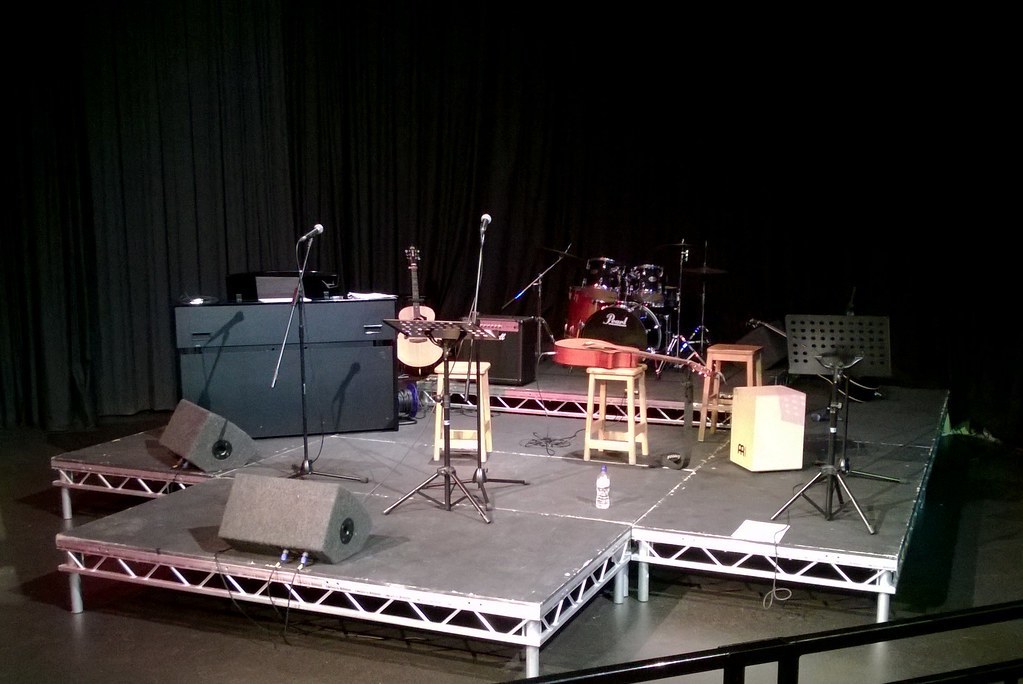
When Loom Hall opened in a gutted Foundry Row textile mill a decade ago, owner Sal Renner booked whoever would return his calls, because almost no touring act wanted to play a neighborhood most of the city still associated with boarded-up factories. This weekend, the venue celebrated ten years with three sold-out anniversary shows in a Foundry Row that looks almost nothing like the one it opened into.
Loom Hall opened its doors in a converted textile mill on the edge of Foundry Row a decade ago, when the surrounding blocks were still mostly vacant industrial buildings and touring acts routinely passed over Bellwater in favor of larger markets. Owner Sal Renner marked the anniversary this weekend with three sold-out shows, including a Friday night set from a band that played Loom Hall’s opening week and has since gone on to headline festivals well outside the region.
“I signed that lease because it was the only building in the city I could afford that had the bones for a real room, not because I thought Foundry Row was about to become anything,” Renner said. “For the first few years, I was mostly booking bands who needed a place to play between two other cities and didn’t care that half our block was boarded up.”
A neighborhood that caught up to the venue
Foundry Row’s transformation into a biotech and loft corridor has changed Loom Hall’s fortunes considerably, drawing a larger and more affluent audience within walking distance of the venue. Renner said ticket sales have roughly tripled since the neighborhood’s turnaround began in earnest, and the venue no longer struggles to fill weeknight shows the way it did in its early years.
“There’s an irony in it that I think about more than people probably assume,” Renner said. “The reason I could afford this building in the first place is the same reason it took years to get anyone to come here. Now the thing that fixed the second problem is slowly creating a different one, because my rent has gone up right along with everyone else’s on this side of the neighborhood.”
I played Loom Hall’s second-ever show to maybe forty people in a room built for three hundred. Coming back this weekend to a sold-out crowd, in a neighborhood that now has three coffee shops within a block of the venue, it’s genuinely hard to process how much has changed.
Wyatt Cole, musician and Loom Hall opening-week performer
New neighbors, new noise
Renner acknowledged that the same loft conversions bringing in customers have also brought in residents less accustomed to a music venue’s late-night bass lines than the empty warehouses that once surrounded Loom Hall. He said the venue has fielded a handful of informal noise complaints over the past year, though nothing yet that has escalated to a formal city process, and that he has begun exploring additional soundproofing as a preventive step.
“Ten years ago nobody lived close enough to Loom Hall to complain about anything,” Renner said. “Now I’ve got people two floors above a loading dock, and I understand why a Tuesday night show at full volume isn’t what they signed up for when they bought a unit in a converted mill. I’d rather get ahead of that than wait for it to become a bigger problem.”
Interviews with several longtime Loom Hall regulars this weekend surfaced a mix of nostalgia and mild wariness about the venue’s rising profile. Marta Delgadillo, who has attended shows at Loom Hall since its second season, said she worries the venue’s growing popularity could eventually price out the kind of small local acts that used to fill its slower weeknight slots.
“I love that this place is thriving now, I really do,” Delgadillo said. “But part of what made Loom Hall special was that you could see a band on a random Tuesday for eight dollars, no opener, half the room. If ticket prices keep climbing to match the neighborhood, that version of the venue disappears, even if the building stays exactly the same.”
Renner said he is aware of that concern and has resisted pressure from some touring acts’ representatives to raise ticket prices across the board, opting instead to keep a tiered pricing structure that reserves lower-cost tickets for the venue’s regular weeknight local-artist showcases. “The big weekend shows can carry a higher price because people will pay it,” he said. “The Tuesday night slot for a band nobody’s heard of yet stays cheap, because that’s the slot that made this place what it is.”
- Loom Hall’s anniversary weekend included three sold-out shows, one featuring an act that played the venue’s opening week.
- Renner said ticket sales have roughly tripled since Foundry Row’s redevelopment accelerated.
- The venue is exploring additional soundproofing following informal noise complaints from newer residential neighbors.
Renner said he has no plans to relocate or significantly raise ticket prices despite the venue’s rising costs, calling Loom Hall’s identity as an accessible neighborhood room central to why it has lasted a decade in the first place. “The whole reason this place worked when nobody else wanted to be here is that it never tried to be fancier than it needed to be,” he said. “I’m not interested in changing that just because the neighborhood outside got fancier around us.”
Looking ahead, Renner said he is in early talks to expand Loom Hall’s all-ages matinee series, a program he started five years ago partly as a way to keep ticket prices low for younger fans priced out of evening shows. “If Foundry Row is going to keep getting more expensive, I want at least one thing in this neighborhood that a teenager can still afford to walk into,” he said.