
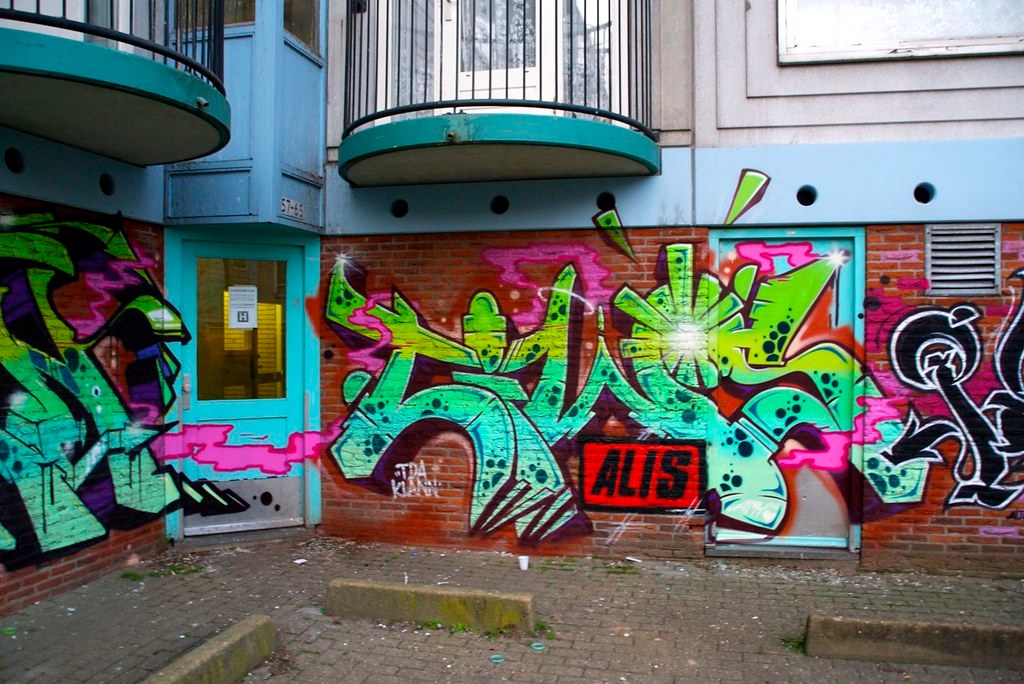
Two years after nine murals transformed a stretch of the Kestrel River Greenway into what organizers called an open-air gallery, curator Priscilla Adeyemi returned to the city council Tuesday asking for a second phase, this time extending the series into Riverside Heights at a proposed cost of $410,000.
Adeyemi’s proposal, presented during Tuesday’s council work session, would add seven murals along a roughly three-quarter-mile stretch of the greenway extending from the existing installation’s eastern end into Riverside Heights, an area the original nine-mural project stopped short of two years ago. The proposed $410,000 budget, higher than the first phase’s $340,000 grant, reflects both a larger number of wall sites and rising costs for materials and artist stipends since the first phase was funded.
“The first phase proved this works, both as public art and as something that actually changes how people use the greenway,” Adeyemi told the council. “Riverside Heights has just as much flood-wall and pump-station surface as the stretch we already painted, and residents there have been asking the museum for two years when it would be their turn.”
A neighborhood that asked for it
Council Member Aisha Muhammad, whose Riverside Heights district would host the new murals, said she has fielded regular inquiries from constituents since the first phase opened, some of whom felt their stretch of the greenway had been passed over. She said she plans to support the funding request when it comes to a formal vote.
“My constituents watched Downtown Core and Foundry Row get this beautiful, well-publicized amenity and then watched the tour buses and the walking groups stop just short of our part of the trail,” Muhammad said. “This isn’t just an arts question for my district. It’s a question of whether Riverside Heights gets treated as a full partner in this city’s public investments or an afterthought.”
I told this curator two years ago that a second phase would come within two budget cycles, and I meant it. Whether the vote goes the same way as last time is a separate question, but the promise itself was never in doubt.
Walter Kowalczyk, City Council Member, At-Large (Council President)
The old argument returns
The proposal has already revived the funding debate that nearly sank the first phase. Council Member Gary Petrowski, who voted against the original $340,000 grant and has since criticized both the museum’s new industrial history wing and the mural project’s rising costs, said he intends to oppose the second phase unless it is paired with new treatment or workforce funding for Cedar Hollow.
“I lost that vote once and the murals turned out beautifully, so I understand why people think I should just get out of the way this time,” Petrowski said. “But $410,000 is $410,000, and I still don’t think this city has answered the question of why public art keeps finding money that public health services can’t.”
Adeyemi said the museum is exploring supplemental private funding, including possible support from Foundry Row employers who benefited from the first phase’s foot-traffic increase, in an effort to reduce the amount drawn from the city’s general arts fund. She declined to name specific companies in discussions, saying no commitments had been finalized.
Adeyemi said the museum has also begun early conversations with residents along the proposed Riverside Heights route about what themes the new murals should reflect, an outreach step she said the first phase largely skipped. “The first nine murals were designed mostly by the museum and the artists, then presented to the neighborhood once they were already painted,” she said. “This time I want Riverside Heights residents to have actually weighed in on what story gets told on their own stretch of wall before a single brush touches it.”
She said two community input sessions are scheduled in the coming weeks regardless of the council’s eventual funding decision, calling the outreach valuable on its own even if the vote does not go the museum’s way. “If the council says no, we’ll have still learned something about what this neighborhood wants,” Adeyemi said. “I’d rather have that information sitting on a shelf than not have asked the question at all.”
- The proposed second phase would add seven murals along roughly three-quarters of a mile of greenway extending into Riverside Heights.
- The projected $410,000 cost is higher than the first phase’s $340,000 grant, reflecting added sites and rising materials and stipend costs.
- Council Member Gary Petrowski has signaled opposition absent additional treatment or workforce funding for Cedar Hollow.
A formal funding vote is expected within the next two council budget cycles, according to Kowalczyk, who said he expects the debate to closely mirror the first phase’s narrow one-vote passage. Adeyemi said the museum has already begun informally soliciting interest from artists, including several who worked on the first phase, in anticipation of council approval.
“I’d rather have the artists lined up and ready than scramble for six months after a yes vote,” Adeyemi said. “I learned that lesson the first time, when we almost lost our best muralist to another city’s timeline while we were still waiting on the council.”