
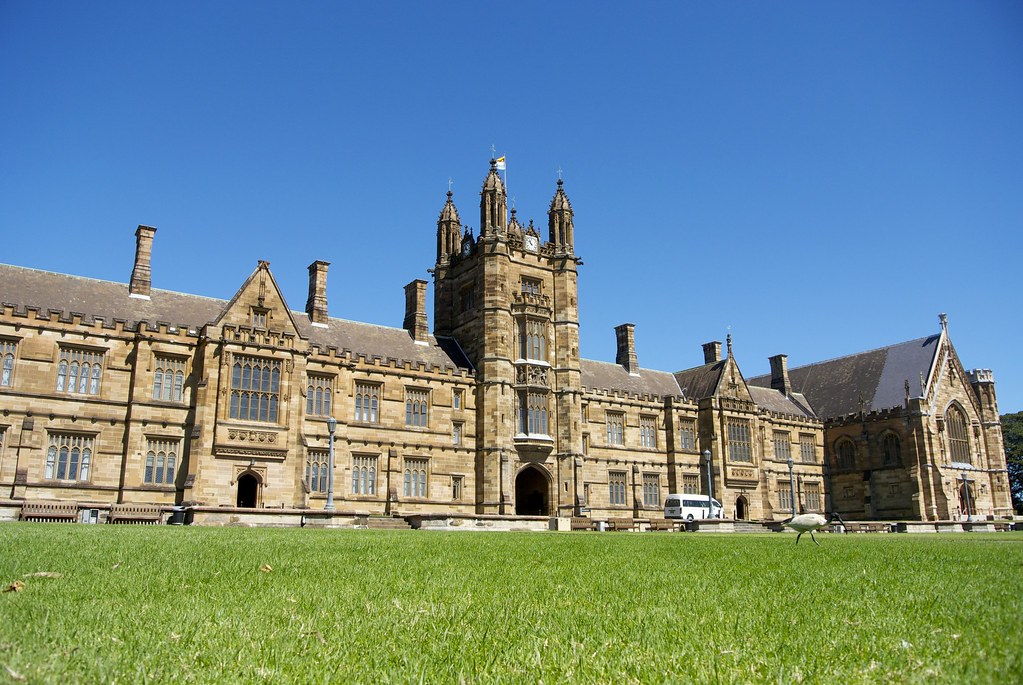
Kincaid University President Howard Faircloth announced a $200 million capital campaign Thursday, the largest fundraising effort in the private university's history, directing money toward biotech research, journalism school renovations and financial aid.
Kincaid University President Dr. Howard Faircloth announced a $200 million capital campaign Thursday, the largest fundraising effort in the private university’s history, with money earmarked for biotech research commercialization, journalism school renovations and an expansion of need-based financial aid.
Faircloth said the campaign, dubbed “Kincaid Forward,” has already secured roughly $85 million in pledges from alumni and corporate partners, including an anchor gift tied to the university’s biotech research programs, ahead of Thursday’s public announcement. The remaining $115 million will be raised over the next five years, he said.
Three priorities, one pitch
The campaign’s single largest allocation, roughly $80 million, is directed toward expanding lab space and faculty positions supporting biotech commercialization, building on the success of Dr. Wei-Lin Tan’s gene-therapy research, which followed Kestrel Biologics’ recent funding round and helped anchor Foundry Row’s biotech cluster. Faircloth said the university wants to replicate that outcome with additional faculty labs rather than relying on a single success story.
A second priority, roughly $45 million, is aimed at renovating the School of Communications’ newsroom lab and expanding scholarship funding, a priority Dean Priya Sundaram has pushed for as the school’s applications have climbed for three consecutive years despite a shrinking news industry. “We have more students who want this training than we have modern facilities to train them in,” Sundaram said. “This campaign is the first real chance to fix that in over a decade.”
The remaining roughly $75 million is earmarked for need-based financial aid, an area Faircloth said the university has fallen behind on relative to peer institutions even as tuition has continued to rise. “We cannot keep calling ourselves a school that serves this city if a Bellwater kid whose parents work at the hospital or the turbine plant can’t afford to come here,” Faircloth said.
A skeptical faculty senate
Not every member of Kincaid’s faculty senate greeted the announcement warmly. Several senators, speaking during a question period after Faircloth’s presentation, pressed him on why biotech commercialization was receiving nearly double the funding earmarked for financial aid, given the university’s stated commitment to affordability. One senator from the humanities division asked whether departments outside biotech and journalism should expect any of the campaign’s proceeds at all.
Faircloth said the campaign’s allocations reflected where he believed donors were most willing to give large gifts, rather than a statement about which departments the university valued most. “Donors write checks for labs and buildings more readily than they write checks for a philosophy department’s operating budget,” he said. “That’s not fair, and I’ve said as much to donors directly, but it’s the reality we’re fundraising inside of.”
This is the most ambitious fundraising campaign this university has ever attempted, and I want to be honest that we will not hit every target on every timeline. But five years from now, I want a Bellwater student choosing between us and a state school to see real evidence that we heard them on cost.
Dr. Howard Faircloth, President, Kincaid University
University trustees approved the campaign’s framework earlier this year but left specific allocation decisions to Faircloth’s office, according to a university spokesperson. Faircloth said he expects to provide the board with quarterly fundraising updates and said the university would adjust allocations if certain priorities proved harder to fund than others.
The announcement comes as Kincaid competes for both students and donors with Bellwater State University, which has pursued its own biotech expansion through a newly announced biomanufacturing lab funded partly by state grants. Faircloth said he did not view the two universities as directly competing for the same donor base, but acknowledged the timing invited comparison. “We’re a private university making a private-sector bet,” he said. “They’re a public university making a public-sector bet. Both bets are on the same underlying economy.”
University fundraising staff said the campaign’s early pledges have come disproportionately from alumni who graduated within the past fifteen years, a shift from prior campaigns that leaned more heavily on older donors. Faircloth said he viewed that pattern as encouraging, suggesting that younger alumni working in the region’s biotech and technology sectors saw a direct stake in the university’s continued investment in those fields.
Faircloth said the university has not ruled out adjusting the campaign’s allocations if fundraising for one priority area significantly outpaces another, though he cautioned that any reallocation would require trustee approval. He said the university’s development office would publish a public progress dashboard tracking pledges against each of the campaign’s three stated priorities, a transparency measure he said was intended to hold the university accountable to its own stated goals.
The five-year campaign timeline puts its conclusion roughly in line with the expected completion of Bellwater State’s new biomanufacturing lab, a coincidence Faircloth said he had noticed but did not read into. “I’m not thinking about this as a race,” he said. “I’m thinking about it as two institutions independently deciding this region’s biotech future is worth a major bet. I’d rather there be two of us trying than just one.”