
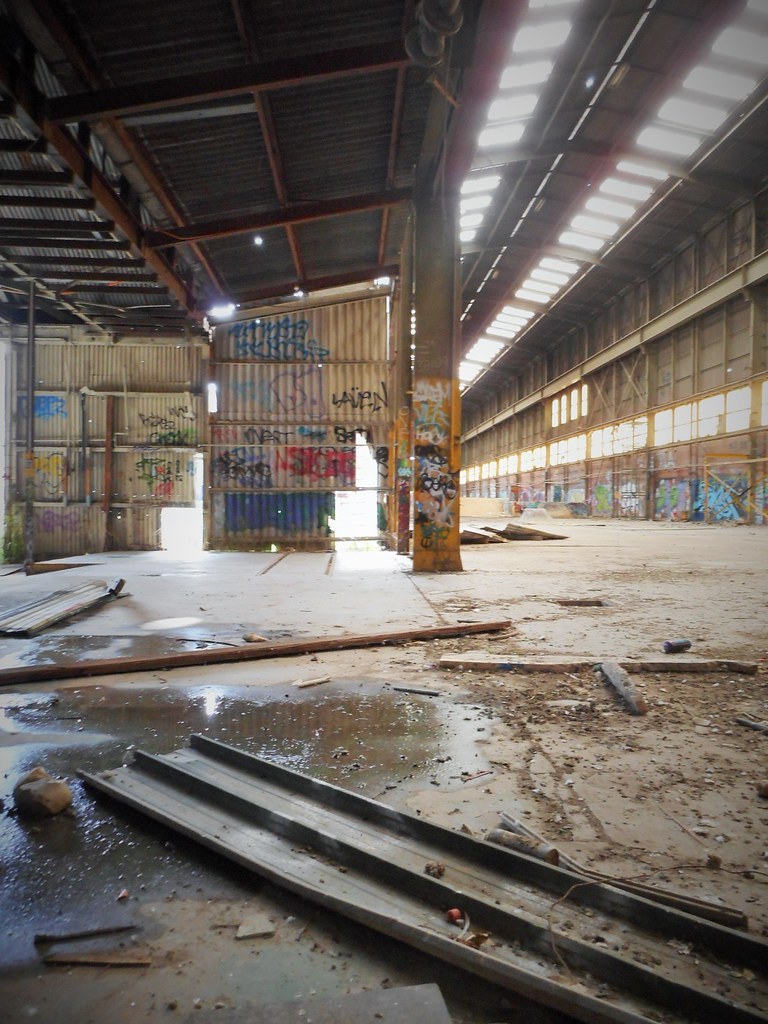
A second former factory building on Anvil Street in Foundry Row is set to become apartment lofts, the latest sign that the neighborhood's transformation from shuttered manufacturing district to biotech and residential hub is extending beyond the Mill Street corridor where the Foundry District Lofts drew national attention, and a lawsuit, over its affordable-housing promises.
A second former factory building on Anvil Street in Foundry Row is set to become apartment lofts, the latest sign that the neighborhood’s transformation from shuttered manufacturing district to biotech and residential hub is extending beyond the Mill Street corridor where the Foundry District Lofts drew national attention, and a lawsuit, over its affordable-housing promises.
The building, a three-story brick structure that once housed Anvil Street Casting Company before the plant closed in the early 2000s, will be converted into 86 apartments under a proposal filed with the city’s planning department by Redline Property Group, a developer with no prior projects in Bellwater. The company is seeking a historic-preservation tax credit to offset renovation costs, along with a density bonus tied to a pledge of income-restricted units.
A familiar pitch, with lessons from next door
Redline’s proposal includes 16 units, or roughly 19 percent of the total, set aside as income-restricted, a share the company’s local attorney, Preston Ake, said was deliberately set above the city’s typical 15 percent threshold. “We know exactly what conversation this neighborhood is having right now,” Ake said, referring to the pending litigation over the Foundry District Lofts a few blocks away. “We built our numbers to avoid ever being in that conversation.”
City Council Member Luis Bettencourt, who represents Foundry Row, said he has grown more cautious about taking developers at their word since the lawsuit over the Foundry District Lofts’ affordable-unit shortfall became public. “I don’t doubt Redline means what they’re saying today,” Bettencourt said. “But I’ve learned that what a company says at a planning meeting and what shows up in a lease three years later can be two different things. We’re going to want enforceable language in the agreement, not a verbal commitment.”
Bettencourt said he plans to push for the redevelopment agreement to include the same phased-compliance language the city attorney’s office is now reviewing as part of the Foundry District Lofts dispute, which would require the income-restricted ratio to hold at each construction phase rather than only at project completion.
Every time one of these buildings gets a rendering and a ribbon-cutting date, somebody in Lowertown asks me if this is going to be the one that actually delivers.
Luis Bettencourt, City Council Member, District 5
The Anvil Street building is smaller than the 214-unit Foundry District Lofts complex, and unlike that project, it sits on a single, already-approved parcel rather than requiring a multi-phase build-out, something Ake said should make full compliance easier to verify. “There’s no phase two to hide behind here,” he said. “It’s one building. Either the units are there or they’re not.”
Preservation advocates want the facade kept intact
The city’s historic preservation commission is reviewing the project separately, focused on whether the renovation plan preserves the building’s cast-iron window frames and loading-dock facade, features commission chair Dolores Whitfield said make the building one of the last intact examples of Bellwater’s early 20th-century casting industry. “We lost most of this streetscape to demolition twenty years ago,” Whitfield said. “What’s left is worth protecting even as the use inside changes.”
Redline’s plans call for preserving the exterior brick and windows while gutting the interior for residential units, a common approach in adaptive-reuse projects that Whitfield said her commission generally supports so long as character-defining features remain visible from the street.
- 86 apartments planned across the former Anvil Street Casting Company building
- 16 units, about 19 percent, proposed as income-restricted
- Historic-preservation tax credit application pending alongside the rezoning request
Denise Okonkwo-Marsh, lead organizer of the Lowertown Tenant Alliance, which is a co-plaintiff in the Foundry District Lofts suit, said her group intends to track the Anvil Street project closely as it moves through city approvals. “We’re not saying don’t build it,” Okonkwo-Marsh said. “We’re saying we’re going to be at every hearing, checking the numbers against what actually gets delivered, because apparently that’s the only way anybody follows through around here.”
Ake said Redline welcomes the scrutiny and has offered to include a provision allowing the tenant alliance to request occupancy documentation for the income-restricted units on an annual basis, an accommodation he said goes beyond what the city currently requires of developers.
The project still needs approval from the planning commission and a rezoning vote from the full council, a process city planning staff estimate will take four to six months. If approved, construction would begin next year, with the first units expected to open roughly 18 months after that. Bettencourt said he expects the redevelopment agreement’s enforcement language, not the design itself, to be the focus of debate when the matter reaches the council floor.
Ake said Redline has also agreed to cap annual rent increases on the income-restricted units at 3 percent for the first ten years of occupancy, a term he said the company volunteered rather than one the city required. Bettencourt called that a useful starting point but said he would still push to have it written into the binding redevelopment agreement rather than left as a company policy that could change under new ownership.