
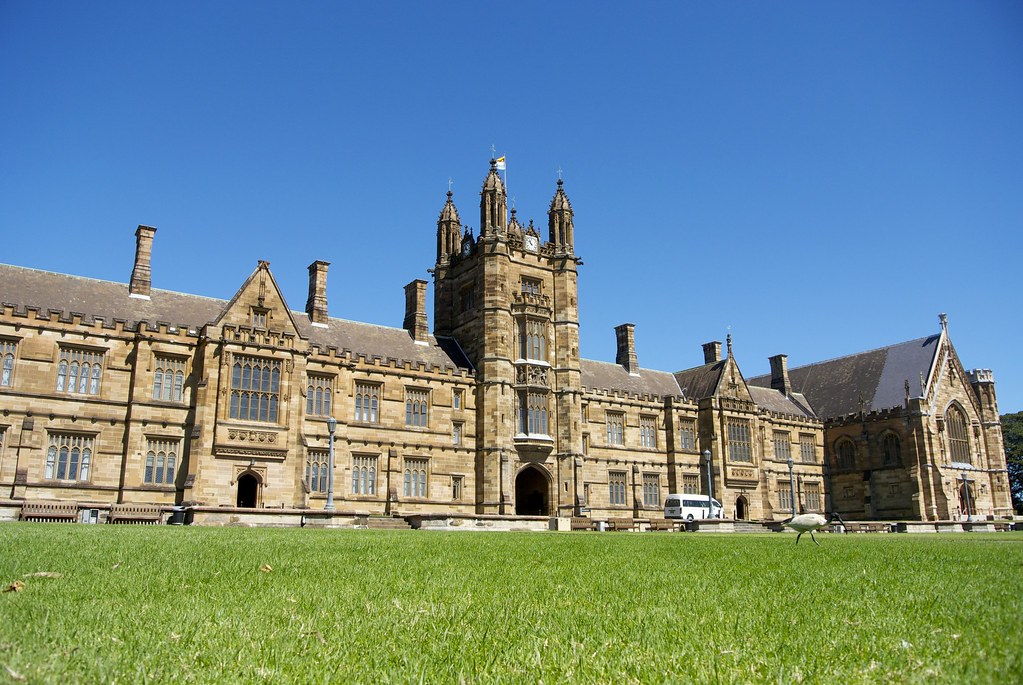
Kincaid University's technology-transfer office has announced its second biotech spinout, Halcyon Biotherapeutics, built around a faculty lab's autoimmune-disease research and fulfilling a commitment university leaders made a year ago.
Kincaid University’s technology-transfer office has announced its second biotech spinout, a company called Halcyon Biotherapeutics built around a Kincaid lab’s research into autoimmune disease treatment. The announcement fulfills a commitment Kincaid President Dr. Howard Faircloth made following Kestrel Biologics’ $64 million funding round, when he said the university expected to announce at least one new spinout within the year.
“Kestrel was the proof of concept,” Faircloth said. “Meridian is the first evidence the model is repeatable rather than a one-time success story.”
A different lab, a similar path
Meridian is built around research from Dr. Felix Amara’s Kincaid lab, which has spent several years studying a signaling pathway implicated in a range of autoimmune conditions. Dr. Renata Solis, director of Kincaid’s Office of Technology Transfer, said the office worked with Amara for nearly two years to structure the spinout, a process she said benefited directly from lessons learned during Kestrel’s earlier formation.
“The first time we did this, with Dr. Tan’s lab, we were building the playbook as we went,” Solis said. “This time we had a playbook. That cut what used to take three years down to under two.”
I spent a decade assuming the only path for this research was publishing papers other labs would build on somewhere else. Kincaid convinced me there was a path where I got to build on it myself, here.
Dr. Felix Amara, Kincaid University
Leadership from outside the lab
Unlike Kestrel, whose founding scientist Dr. Wei-Lin Tan initially served as both researcher and early executive, Amara said he plans to remain focused on the science while the company hires outside executive leadership. Meridian has named Vivian Calloway, a biotech industry veteran with experience at two prior startups, as chief executive.
“Felix should be running experiments, not budget meetings,” Calloway said. “My job is to make sure the science gets a real shot at becoming a treatment, which mostly means keeping the company funded and organized enough that he never has to think about either of those things.”
Faircloth said the university is exploring an expanded lab-space lease at Forge Bellwater specifically to give early-stage spinouts like Meridian room to grow, a plan first discussed publicly around Kestrel’s funding announcement. Meridian has already taken lab space at the Foundry Row incubator, one of the tenants cited by executive director Nadia Osei as driving demand behind the incubator’s planned second-floor expansion.
Dr. Samuel Iyer, the Bellwater State University labor economist who tracks the region’s biotech growth, called the second spinout an encouraging sign for the durability of Bellwater’s recovery strategy but cautioned against over-reading a single new company. “One spinout is a data point. A pattern is three or four,” Iyer said. “Kincaid says it wants three or four more of these in the next decade. This is one of them. That leaves a lot riding on the next ones.”
Solis said the technology-transfer office is currently evaluating two additional faculty research programs for potential spinout status, though she declined to name the researchers or disciplines involved, citing the sensitivity of early conversations. “Not every promising lab wants to become a company,” Solis said. “Part of our job now is figuring out which ones do before we spend two years finding out the hard way.”
Amara said Meridian expects to begin preclinical testing within the year, a milestone he called “the real first test” of whether the spinout can follow Kestrel’s path toward an eventual clinical trial. “Kestrel is three years ahead of us,” Amara said. “I would take being three years behind them over not existing as a company at all, which is where this research would be sitting otherwise.”
Calloway said the company is already in early talks with investors about a seed funding round to cover that preclinical work, a process separately detailed by the Times as it developed, and that she expects to close a round within the next several months.
Solis said the technology-transfer office structured Meridian’s formation so that Kincaid retains a minority equity stake and a royalty interest in any eventual treatment, terms she said are now standard for university spinouts after being negotiated somewhat informally during Kestrel’s earlier formation. “We learned the hard way with Kestrel that you want those terms in writing before the company is worth anything, not after,” Solis said.
Faircloth said the university’s ambitions extend beyond biotech, though he acknowledged the technology-transfer office’s current pipeline is concentrated there given the strength of Kincaid’s life-sciences faculty. “Biotech is where we happen to have the deepest bench of researchers with commercially viable work,” Faircloth said. “I would not be surprised if the next spinout after Meridian comes out of a completely different department, but I also wouldn’t bet against it being biotech again.”
Amara said he has already fielded questions from colleagues in other departments asking how the spinout process worked, a shift he attributed partly to Meridian’s relatively fast timeline from lab to funded company. “People used to see this as something that happened to other people’s research,” Amara said. “Now colleagues are asking me what Renata’s office actually does, which is a different kind of conversation than the one I was having two years ago.”