
Halcyon Biotherapeutics, the autoimmune-disease company that emerged from Kincaid University's newly announced second biotech spinout, has closed an $8 million seed funding round less than two months after its formation was made public.
Halcyon Biotherapeutics, the autoimmune-disease company that emerged from Kincaid University’s recently announced second biotech spinout, has closed an $8 million seed funding round, the company said this week, less than two months after its formation was made public. Chief Executive Vivian Calloway said the round will fund the company’s first 18 months of preclinical research.
“Eight million dollars sounds like a lot until you price out what a year of preclinical work in this field actually costs,” Calloway said. “It gets us to our next real decision point, not to a finished drug.”
A smaller round, on a faster timeline
The round is a fraction of the $64 million Series C that Kestrel Biologics raised at a much later stage in its development, a comparison Calloway said is somewhat misleading given the two companies are at very different points in their life cycles. “Comparing our seed round to Kestrel’s Series C is like comparing a company’s first paycheck to its tenth-anniversary bonus,” she said. “We would love to get to a moment where that comparison makes sense.”
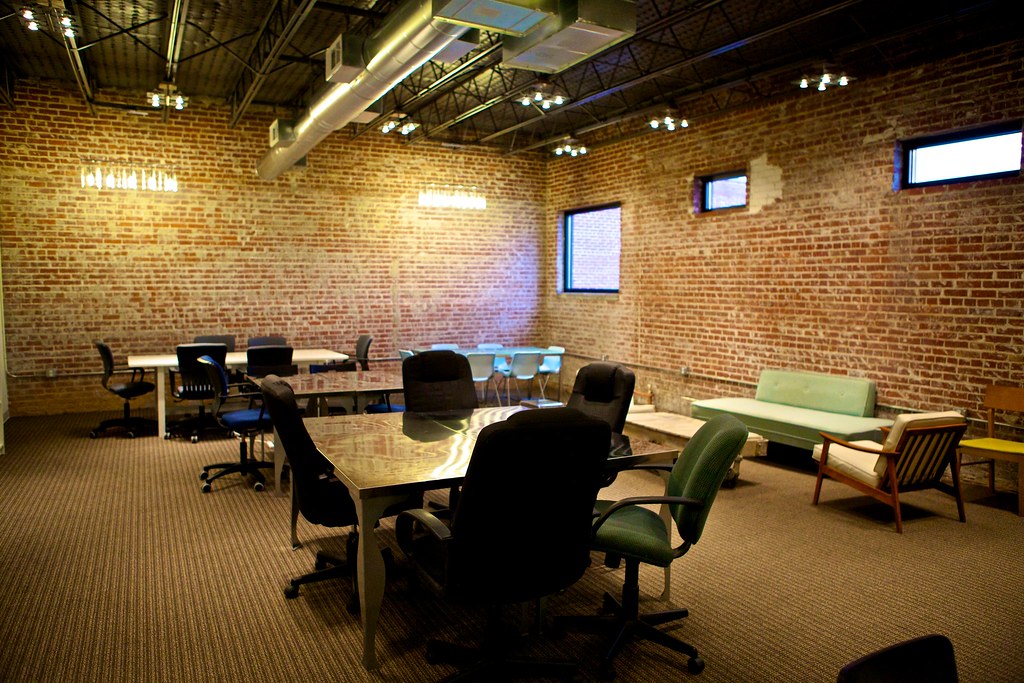
Meridian has taken lab space at Forge Bellwater, the Foundry Row incubator that recently announced a second-floor expansion partly driven by demand from growing tenants like Meridian itself. Dr. Felix Amara, the Kincaid researcher whose lab produced the science behind the company, said the incubator space has let Meridian begin work immediately rather than waiting to build out its own facility.
We went from a research lab to a company with its own funding and its own lease inside of a year. Kestrel took longer to get here, but Kestrel also built the path that let us move faster.
Dr. Felix Amara, Kincaid University
Hiring begins small
Calloway said the company plans to hire roughly eight scientists and technicians over the next year, a modest number compared with the hiring plans of more established Foundry Row biotech firms but one she said reflects Meridian’s early stage rather than any hesitation about the region. “We are not trying to hire fifty people who don’t have real work to do yet,” she said. “We are trying to hire eight people who can move the science forward as fast as possible.”
Dr. Renata Solis, director of Kincaid’s Office of Technology Transfer, said Meridian’s quick path from announcement to funded company reflects the university’s effort to shorten the timeline for future spinouts. “The faster a spinout can get from a lab notebook to a funded, independent company, the less time we spend worrying about the science stalling out inside a university bureaucracy,” Solis said.
Dr. Samuel Iyer, the Bellwater State University labor economist, said the seed round is a modest but meaningful data point for the durability of Bellwater’s biotech growth strategy. “Small seed rounds don’t make headlines the way a Series C does,” Iyer said. “But a functioning ecosystem needs more small rounds like this one, not just the occasional giant one. That is what actually builds a pipeline of future Kestrels.”
Calloway said the company’s investors, a mix of regional angel investors and one out-of-state biotech-focused venture fund, were drawn in part by Kincaid’s track record with Kestrel. “Investors kept asking whether this city could do it twice,” she said. “Being able to point at Kestrel and say the infrastructure already exists made this round close faster than it might have otherwise.”
Amara said he expects Meridian’s preclinical work to produce its first meaningful results within the year, a milestone that would determine whether the company pursues a larger Series A round or seeks a partnership with a larger drugmaker instead. “I try not to think too far past the next experiment,” Amara said. “But I would be lying if I said I hadn’t thought about what a version of Kestrel’s last year might look like for us.”
Calloway said the seed round’s investors include two Kincaid alumni who previously worked at Kestrel Biologics before leaving to join Meridian, a hiring pattern she expects to continue as the company grows. “We are, in a very direct sense, drawing on the talent Kestrel helped train,” Calloway said. “That is not a coincidence. That is the whole model working the way it is supposed to.”
Nadia Osei, executive director of Forge Bellwater, said Meridian’s quick funding turnaround has already changed how she pitches the incubator to prospective tenants. “I can now tell a founder considering us that the last two biotech companies to come through this building both had funded seed rounds within a year,” Osei said. “That is a very different sales pitch than the one I was giving five years ago.”
Solis said the technology-transfer office is treating Meridian’s seed round as an early test of whether Kincaid’s standard equity and royalty terms for spinouts are attractive enough to outside investors, given that Meridian’s round closed without significant renegotiation of those terms. “If investors keep accepting our standard terms without a fight, that tells us we priced this correctly,” Solis said. “If the next spinout’s investors push back hard, that tells us something different.”
Iyer said he plans to track Meridian’s progress over the coming year as a case study in how quickly a second-generation spinout can move once a university has built the institutional muscle to support one. “The first time is always the hardest and the slowest,” Iyer said. “The real test of whether Bellwater built something durable is whether the third and fourth spinouts move even faster than this one did.”