
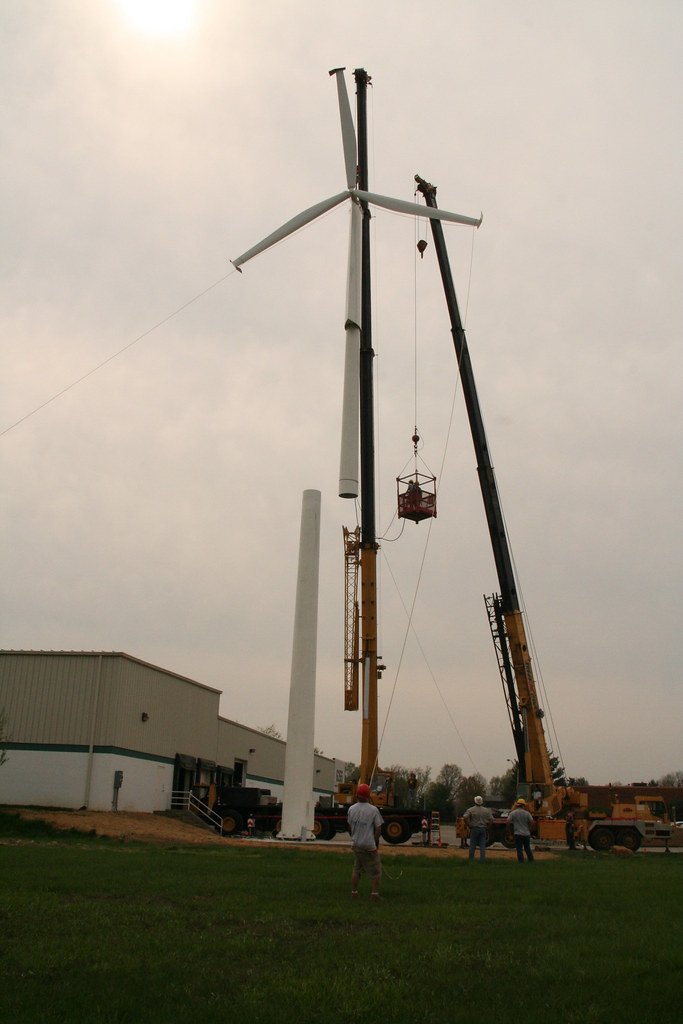
The West Bellwater Manufacturing Park is set to expand onto 22 acres of adjacent farmland, adding space for as many as four new green-energy manufacturers, city and county economic development officials announced this week, in what would be the largest single expansion of the industrial park since it opened a decade ago.
The West Bellwater Manufacturing Park is set to expand onto 22 acres of adjacent farmland, adding space for as many as four new green-energy manufacturers, city and county economic development officials announced this week, in what would be the largest single expansion of the industrial park since it opened a decade ago.
The expansion, backed by a $14 million infrastructure package split between city and Wentworth County funds, would extend water, sewer and three-phase power lines to the new parcels and construct a rail spur connecting to the freight line that already serves Bellwater Turbine Works, the park’s anchor tenant.
Chasing the supply chain around the anchor tenant
City Council Member Denise Okafor, who represents West Bellwater, said the expansion is designed to attract component suppliers that currently ship parts to Bellwater Turbine Works from out of state. “Every time I tour that plant, the tour guide points at some part on the assembly line and tells me it came from four states away,” Okafor said. “That’s exactly the kind of thing we should be able to build here instead of trucking in.”
Theresa Nakamura, executive director of the Bellwater Chamber of Commerce, said her office has been in early talks with two component manufacturers, one specializing in turbine blade coatings and another in battery-storage housings, about relocating operations to the expanded park. Neither company has signed a lease, and Nakamura declined to name them, citing ongoing negotiations.
“These are exactly the kind of mid-sized employers that can put a real dent in the skills gap everyone talks about,” Nakamura said. “They need welders, electricians and machinists, not just a handful of engineers. That’s a different labor pool than the biotech firms in Foundry Row are drawing from.”
We built the community college’s West Bellwater campus expansion around exactly this kind of employer. It doesn’t do anyone any good if the jobs show up two counties over instead.
Dr. Ramon Delgado, President, Bellwater Community College
Bellwater Community College President Dr. Ramon Delgado, whose institution’s West Bellwater campus has expanded its manufacturing and industrial-technology programs in recent years, said the timing lines up with the college’s own workforce-training push. He said enrollment in the college’s welding and industrial-electrical certificate programs has grown by nearly a third over the past two years, driven largely by students hoping to land jobs at Bellwater Turbine Works or its eventual suppliers.
Not everyone is convinced the jobs will materialize quickly
Dr. Samuel Iyer, the Bellwater State University labor economist who studies the region’s manufacturing decline and recovery, cautioned that industrial park expansions do not always fill up as fast as officials project. “I’ve seen plenty of ribbon-cuttings on infrastructure that then sits half-leased for years,” Iyer said. “The infrastructure spending is a necessary condition for growth, but it’s not sufficient on its own. You need the tenants lined up, and right now those are still handshake deals, not signed leases.”
Iyer also noted that competition for green-energy manufacturing investment has intensified nationally, with several other states and metro areas offering their own tax incentives to lure component suppliers, meaning Bellwater’s expanded park will need to compete on more than available land and utility hookups.
- 22 acres of new industrial park land, adjacent to the existing West Bellwater Manufacturing Park
- $14 million in infrastructure funding, split between city and county sources
- Space planned for up to four new manufacturing tenants, with two in early lease talks
Okafor acknowledged the risk but said the city structured the infrastructure investment to be usable even if the specific tenant conversations underway do not pan out. “Water, sewer and a rail spur don’t become worthless if one deal falls through,” she said. “We’re building something that makes the site attractive to whoever eventually says yes, not betting everything on two companies.”
Bellwater Turbine Works, which currently employs roughly 640 people at its West Bellwater plant, did not comment on whether it plans to expand its own footprint into the new parcels, though a company spokesperson confirmed it had been consulted during the planning process given its role as the park’s anchor employer.
City officials said the infrastructure work is expected to begin within six months, with the first parcels ready for tenant construction roughly a year after that. Okafor said she expects to bring updates to the council as lease negotiations progress, and that any public incentive package offered to a specific tenant would require a separate council vote.
“I’d rather under-promise on the timeline and over-deliver on the jobs than the other way around,” Okafor said. “West Bellwater has heard a lot of promises about manufacturing coming back over the years. I want this one to actually show up.”