
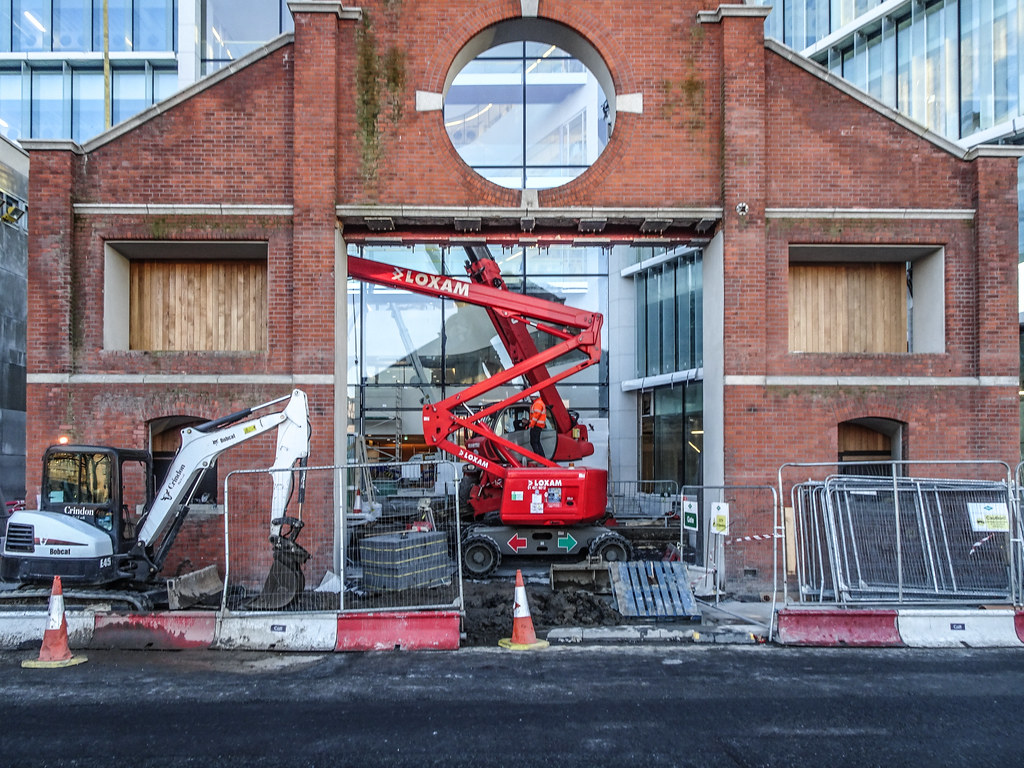
Commercial rents along Foundry Row have climbed nearly 40 percent over the past three years, real estate brokers say, as biotech firms flush with venture funding bid up lab-ready space and squeeze out smaller tenants who can't compete on price.
Average asking rent for lab and flex space along Foundry Row has risen to $34 a square foot, up from $25 three years ago, according to figures compiled by Cornerstone Realty Advisors, one of the city’s largest commercial brokerages. Office rents in the neighborhood have climbed a more modest but still notable 22 percent over the same period, while vacancy across both categories has fallen to just under 3 percent, a level broker Tamara Wolfe called “effectively full.”
“I have biotech tenants asking me to call landlords who haven’t listed anything, just to see if they’d consider an offer,” Deshmukh said. “That’s not a normal market. That’s a market where demand has completely outrun supply.”
The pressure traces largely to Kestrel Biologics’ recent $64 million funding round, which the gene-therapy company has said will fund a near-doubling of its Foundry Row workforce over the next two years, and to expansion by rival Ridgeline Therapeutics, which has quietly leased two additional floors in a converted mill building this year. Both companies have signed leases at rates 30 percent or more above what tenants paid for comparable space three years ago, according to Deshmukh, who has worked on leases for each.
Small tenants squeezed out
For tenants without venture backing, the math has stopped working. Sarno, who runs a small metal-fabrication shop that supplies parts to local artists and a handful of manufacturers, said his rent has risen from $9 a square foot to just under $17 since his last lease renewal, a jump he attributes directly to the neighborhood’s biotech-driven demand. His new landlord, he said, was candid about the reason.
“He told me straight out that a lab company offered him more than double what I was paying,” Sarno said. “I can’t blame him for taking the market rate. I just can’t pay it.” Sarno said he’s relocating to a light-industrial park in West Bellwater, adding roughly 20 minutes to his daily commute but cutting his rent by more than half.
Sarno’s situation echoes what’s happened to a wave of Foundry Row artist studios pushed toward Cedar Hollow by rising rents, and Council Member Luis Bettencourt, who represents Foundry Row, said he hears from displaced tenants almost weekly. “I’ve got biotech companies telling me they can’t hire fast enough and legacy tenants telling me they can’t afford to stay open another year, and both of them are telling the truth,” Bettencourt said. “That’s the position this council is in.”
I’ve got biotech companies telling me they can’t hire fast enough and legacy tenants telling me they can’t afford to stay open another year, and both of them are telling the truth.
Luis Bettencourt, City Council Member, District 5
A supply problem with no easy fix
Theresa Nakamura, executive director of the Bellwater Chamber of Commerce, said the rent surge is, in one sense, a marker of success. “Ten years ago, nobody was fighting over Foundry Row square footage,” she said. “Now we have the opposite problem, which honestly I’ll take, but it means the city has to think seriously about where the next generation of small manufacturers and studio tenants can afford to land.”
That question has become more pointed since the council’s recent decision to cap new Foundry Row construction at 12 stories, a move intended to preserve the neighborhood’s character but one that Deshmukh said has also constrained how much new lab space can come online to relieve the pressure. “You can’t have it both ways forever,” she said. “Either more space gets built, or the rents that are already high keep climbing.”
- Average Foundry Row lab/flex rent: $34/sq ft, up from $25 three years ago
- Average Foundry Row office rent: up 22 percent over the same period
- Combined lab and office vacancy: under 3 percent
- New biotech leases signed in the past year: 6, according to Cornerstone Realty Advisors
Bettencourt said he’s asked city staff to study incentives that could preserve a share of Foundry Row square footage for light-industrial and studio tenants, similar to manufacturing-preservation zones used in other post-industrial cities, though he acknowledged any such proposal would likely draw pushback from property owners benefiting from the current market. “I don’t have a bill ready yet,” he said. “But I’m not willing to just watch the neighborhood get sorted entirely by who can pay the most.”
Nakamura said the chamber is exploring whether a portion of West Bellwater’s industrial land, already drawing green-energy manufacturers, could be marketed specifically to displaced Foundry Row tenants like Sarno’s shop. For now, she said, the migration is happening informally, one lease non-renewal at a time. “We’re basically watching the market sort itself,” she said, “and not everyone likes where it’s landing.”
Sarno said he isn’t holding out hope the city acts quickly enough to help businesses like his. “By the time anyone passes anything, I’ll already be in West Bellwater,” he said. “I don’t think that’s a bad outcome for me personally. I just don’t think everybody has somewhere else to go.”