
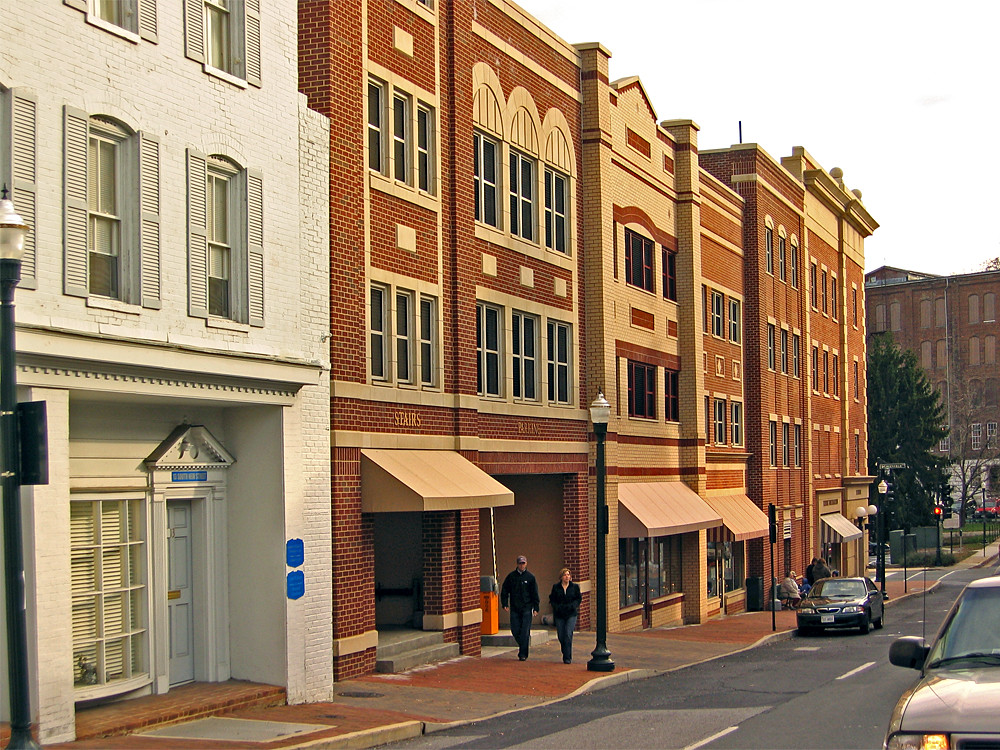
The vacancy rate along Downtown Core's retail corridors fell to 11.4 percent this quarter, down from 14.8 percent a year ago, according to a report released by the Bellwater Chamber of Commerce, marking the first sustained decline since the pandemic-era closures hollowed out Vale Avenue's storefronts.
The vacancy rate along Downtown Core’s retail corridors fell to 11.4 percent this quarter, down from 14.8 percent a year ago, according to a report released by the Bellwater Chamber of Commerce, marking the first sustained decline since the pandemic-era closures hollowed out Vale Avenue’s storefronts.
The improvement comes roughly a year after the city council passed a storefront-vacancy ordinance imposing escalating fees on landlords who leave ground-floor commercial space empty for more than nine months, a measure City Council Member Patricia Yoon championed over objections from some downtown property owners.
Yoon says the ordinance is only part of the story
“I’d love to tell you the ordinance did all of this by itself, but that wouldn’t be honest,” Yoon said. “What it did was change the math for landlords who were content to sit on an empty space and wait for the perfect tenant. Once sitting empty started costing them real money, a lot of them got a lot more willing to negotiate.”
Nakamura, the chamber’s executive director, credited a mix of factors: the ordinance, a new chamber-run matchmaking program connecting prospective small-business tenants with landlords, and spillover foot traffic from Foundry Row’s biotech workforce, some of whom now commute through Downtown Core on the new transit corridor.
“We’re seeing restaurants and service businesses opening specifically because they want to catch people coming off the new bus line,” Nakamura said, referring to the rapid transit route approved by the council connecting West Bellwater to Foundry Row through downtown. “That’s foot traffic that wasn’t there three years ago.”
I signed my lease because the fee ordinance meant my landlord actually returned my calls. Before that, I’d been trying to get into that space for over a year.
Marisol Quintana, owner of a newly opened stationery and gift shop on Vale Avenue
Marisol Quintana, who opened a stationery and gift shop on Vale Avenue three months ago after more than a year of trying to secure a lease, said the ordinance changed her landlord’s posture almost overnight. “Before, he wasn’t returning emails,” Quintana said. “After the fees kicked in, he called me. That tells you something about what was actually driving the vacancy.”
Some landlords say the credit is misplaced
Not all downtown property owners agree the ordinance deserves the credit. Gordon Halvorsen, who owns three buildings along Vale Avenue and was among the ordinance’s most vocal opponents when it passed, said his own vacancies filled only after he lowered asking rents, something he says he would have done with or without the new fees.
“The fee didn’t make a tenant appear out of thin air,” Halvorsen said. “What filled my space was cutting the rent by 15 percent, because that’s what the market said it was worth. I think the city likes to take credit for landlords doing what we would have done anyway.”
- Downtown Core storefront vacancy rate: 11.4 percent this quarter, down from 14.8 percent a year ago
- Roughly 30 previously vacant storefronts have signed new leases since the ordinance took effect
- Vacancy-fee revenue collected so far: just over $310,000, directed into a small-business facade improvement fund
Yoon said the roughly $310,000 collected in vacancy fees so far has been directed into a facade-improvement grant fund that new and existing Vale Avenue businesses can apply for, which she said has helped several tenants afford storefront renovations they otherwise could not have financed.
Still, the vacancy rate remains well above the roughly 6 percent the corridor saw before the pandemic-era closures, and Nakamura cautioned against declaring victory. “Eleven percent is real progress, but it’s not where we were, and it’s not where we want to be,” she said. “We’re going to keep watching this number every quarter.”
Yoon said she plans to propose extending a similar vacancy-fee structure to a stretch of Foundry Row’s commercial frontage, where several ground-floor retail spaces in newer developments, including the Foundry District Lofts, have sat empty since opening. She said she has not yet discussed the idea with Council Member Bettencourt, who represents the district, but expects to raise it in the coming weeks.
For Quintana, the debate over which policy deserves credit matters less than the fact that her shop is open. “I don’t really care what fixed it,” she said. “I care that I’m not still emailing a landlord who won’t call me back.”