
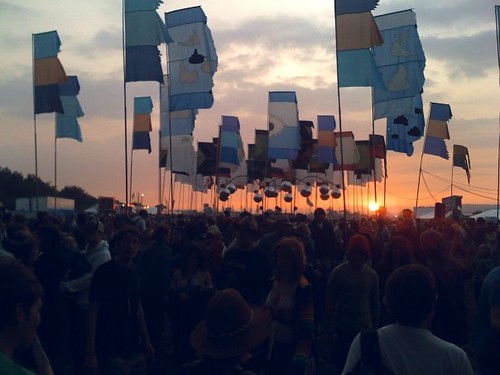
The Riverlight Festival drew an estimated 58,000 attendees across its three-night run this weekend, organizers said Monday, a record for the event and a validation of the expanded footprint and second stage festival director Priya Anand added to the Kestrel River Greenway this year.
Festival director Priya Anand said Monday that this year’s three-night run drew an estimated 58,000 total attendees, up from roughly 41,000 across two nights last year, a jump she attributed to the festival’s newly added second stage and an expanded lineup weighted more heavily toward local acts. Saturday night’s headline set from singer-songwriter Nadia Ruiz drew the single largest crowd in the festival’s history, according to Anand, who said organizers had to briefly pause entry near the main stage as capacity limits were reached.
“We planned for growth, but Saturday still surprised us a little,” Anand said. “When you have to pause the gates even for twenty minutes, that tells you the demand is bigger than your best projection. That’s a good problem, but it’s one we’ll be studying closely before we plan next year’s footprint.”
A win for local acts
Anand said the second stage, added this year specifically to make room for a deeper roster of local performers, drew consistently large crowds throughout the weekend, with several acts reporting that their Riverlight sets outdrew their own headlining shows at Foundry Row’s Loom Hall. Musician Wyatt Cole, who closed out the second stage Friday night, said the exposure was unlike anything he had experienced playing Bellwater venues alone.
“I’ve played Loom Hall to a packed room plenty of times, and that’s still maybe three hundred people on a great night,” Cole said. “Friday I looked out and it was thousands, people who probably don’t know my name but stopped walking because the set caught them. That doesn’t happen without a festival like this deciding to make room for acts like me.”
This is the first year I’ve watched a Riverlight crowd that size stick around for a local act instead of drifting off toward the food vendors until the headliner came on. That’s the kind of shift you build a festival’s future on.
Priya Anand, festival director, Riverlight Festival
Riverside Heights pushes back
Not everyone along the greenway shares the celebratory mood. Council Member Aisha Muhammad, who represents Riverside Heights, said her office received more than 40 resident complaints over the weekend about parking congestion on residential streets and noise extending past the festival’s posted curfew on at least one night. She said the expanded shuttle service organizers added this year clearly helped but did not fully solve the underlying capacity problem.
“Fifty-eight thousand people is a triumph for the festival and a genuine strain on the people who live three blocks from the greenway and still have to get to work Monday morning,” Muhammad said. “I’m glad the shuttle helped. I don’t think it helped enough, and I’ll be asking organizers for a firmer commitment before I sign off on next year’s permit.”
Anand said organizers take the complaints seriously and plan to convene a post-festival review with city officials and neighborhood representatives before finalizing next year’s footprint. She noted that the festival’s economic impact, estimated by the city’s tourism office at more than $3.1 million in local spending this year, has become an increasingly important part of the summer calendar for downtown and Foundry Row businesses.
Chamber of Commerce Executive Director Theresa Nakamura said Vale Avenue restaurants and shops reported some of their strongest weekend sales of the year during the festival, a pattern she said has held for several summers running as festivalgoers extend their visits into downtown before or after greenway sets. “People don’t just come for the music and leave,” Nakamura said. “They’re eating dinner on Vale Avenue first, or grabbing coffee the next morning before they head home. That ripple effect is a big part of why this festival matters to our members.”
Anand acknowledged that balancing that economic upside against Riverside Heights’ quality-of-life concerns will likely define the festival’s next several years of planning. “I don’t think those two things are actually in conflict,” she said. “But I understand why it feels that way to someone whose street is full of parked cars at midnight, and I’m not going to argue them out of that feeling. I’d rather just fix it.”
- Organizers estimate 58,000 total attendees across the three-night run, up from roughly 41,000 last year.
- Saturday’s headline set drew the largest single-night crowd in the festival’s history, briefly pausing gate entry near capacity.
- Council Member Aisha Muhammad reported more than 40 resident complaints about parking and late-night noise in Riverside Heights.
For now, Anand said the festival’s growth trajectory shows no sign of slowing, which she called both the best and most complicated outcome she could have hoped for. “I’d rather have the problem of managing our own success than the problem we had a decade ago, which was convincing anyone this festival was worth the trip,” she said. “But I’m not going to pretend the neighbors’ frustration isn’t real just because the attendance numbers are good.”
Muhammad said she plans to request that any future festival permit include binding parking and noise commitments rather than voluntary mitigation efforts. Anand said organizers are open to the conversation but cautioned that some of what makes the festival successful, namely its scale, is difficult to constrain without changing what the event fundamentally is.