
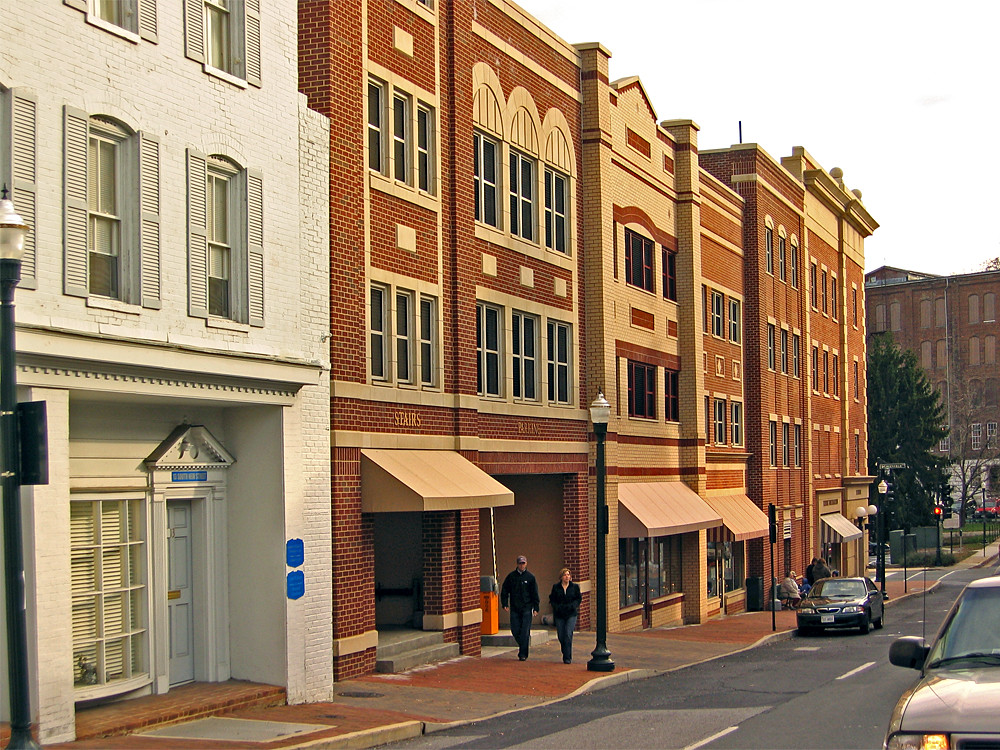
A storefront that sat empty for over a year on Vale Avenue reopened this week, not as a new retail tenant but as a temporary gallery curated entirely by Kincaid University journalism students, who spent the semester reporting on and assembling work from a dozen local artists.
The exhibit, housed in a storefront that had sat empty for more than a year near the corner of Vale Avenue, features work from a dozen local artists alongside printed profiles the students wrote and reported themselves over the course of the semester. Kincaid School of Communications Dean Priya Sundaram said the project was designed to push arts journalism students beyond writing reviews from a press seat and into the messier, more collaborative work of building an exhibit from scratch.
“Arts journalism students spend most of their training writing about work other people curated,” Sundaram said. “This class flips that. They had to pitch artists, negotiate what would hang where, write the wall text, and then defend those choices to each other in workshop. It’s a much more honest introduction to how exhibitions actually get made.”
Finding a storefront to fill
The storefront itself came through an arrangement tied to the city’s ongoing effort to address downtown vacancy. Its landlord agreed to let the students use the space rent-free for two weeks after learning about incentives discussed as part of the city’s push to reduce Downtown Core storefront vacancies, according to instructor and adjunct professor Renata Vukovic, who leads the arts journalism practicum. “A landlord letting students fill dead space for two weeks isn’t going to solve the vacancy problem on its own,” Vukovic said. “But it does put foot traffic and lit windows on a block that’s had neither for a while, and it costs the landlord almost nothing to find out if that helps.”
City Council Member Patricia Yoon, who represents the downtown district and has pushed for storefront-vacancy reforms, toured the exhibit ahead of its public opening and said she would like to see similar temporary-use arrangements formalized rather than left to individual landlords to arrange informally. “This is exactly the kind of low-cost, high-visibility use of empty space I’ve been trying to get more landlords comfortable with,” Yoon said. “I don’t think every vacant storefront needs a permanent tenant to stop being a dead spot on the block.”
What the students learned
Senior arts journalism major Talia Okonkwo, who profiled a Foundry Row muralist for the exhibit, said the assignment forced her to reconsider how much curatorial framing shapes the way audiences interpret an artist’s work. “Writing about a mural after it’s already hanging somewhere is different from helping decide where it hangs and what context surrounds it,” Okonkwo said. “I made a call about placement that I later realized changed how people read the piece entirely. That’s not a mistake I’ll make again as a critic.”
Not every student found the experience smooth. Junior Marcus Feldman, who covered a ceramicist for the project, said negotiating directly with an artist over which pieces to include, rather than simply reviewing finished work, created friction he wasn’t prepared for. “She wanted her newest, most experimental pieces in the show. I thought her more accessible earlier work would draw a bigger crowd,” Feldman said. “We ended up compromising, but it taught me that journalism about art and the business of exhibiting art are not the same skill, even though our program sometimes treats them like they are.”
I’ve had students cover city council meetings and courtroom hearings without flinching. Watching them get genuinely nervous negotiating gallery placement with a working artist told me this project was doing exactly what I hoped.
Renata Vukovic, adjunct professor, Kincaid School of Communications
Sundaram said the school is considering making the pop-up exhibit an annual fixture of the arts journalism practicum if this year’s version draws reasonable foot traffic, though she cautioned the program depends on finding a willing landlord each time. She also noted the timing was deliberate, coinciding with a broader conversation at Kincaid about the future of local news coverage she has been convening panels around throughout the year.
“Arts coverage is often the first beat to shrink when newsrooms cut staff,” Sundaram said. “If we can show a storefront full of visitors that student-produced arts journalism still has real value to a community, that’s a small but meaningful argument for why the beat is worth protecting.”
- Eighteen students profiled twelve local artists over the semester
- The pop-up exhibit runs for two weeks in a previously vacant Vale Avenue storefront
- Organizers hope to make the project an annual fixture of the arts journalism practicum
The exhibit is free and open to the public during Vale Avenue’s regular business hours through its two-week run, with several of the featured artists scheduled to appear in person for a closing reception.