
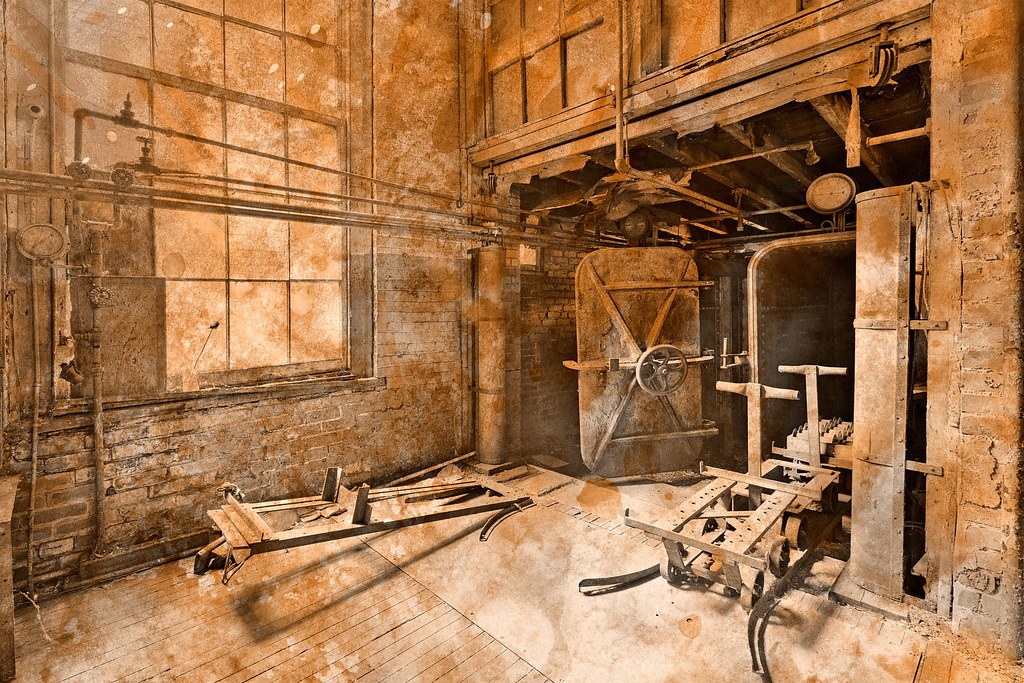
One of the last original manufacturers still operating in Bellwater since the early-2000s factory exodus is shrinking again. Bellwater Steel & Fastener Co. says it will lay off 85 workers within 60 days.
Bellwater Steel & Fastener Co., one of the few original manufacturers still operating in the city since the early-2000s factory exodus, is laying off 85 workers, roughly a quarter of its remaining workforce, the company confirmed Thursday. Executives cited declining orders for the company’s legacy fastener lines and rising competition from automated out-of-state producers.
“We have been losing ground on our core product line for several years,” said company spokesman Harold Stennis. “This is not a decision anyone here wanted to make, but it is the one the order book left us with.”
A shrinking footprint for a legacy employer
The layoffs will reduce Bellwater Steel & Fastener’s headcount to roughly 255 workers, down from a peak of more than 2,000 before the city’s factory jobs began leaving in the early 2000s. Stennis said the affected positions span both production-line workers and administrative staff, with cuts effective within 60 days as required under state notification law.
Dr. Samuel Iyer, the Bellwater State University labor economist, said the layoffs reflect a pattern that has played out repeatedly across the city’s remaining legacy manufacturers. “Bellwater Steel & Fastener has survived twenty years longer than most of its peers,” Iyer said. “That survival has come from shrinking, not growing, and each round of layoffs makes the next one a little more likely.”
Every one of these jobs belonged to somebody who has already lived through one round of factory closures in this city. This is not an abstract restructuring for the people getting the notice.
Dr. Samuel Iyer, Economist, Bellwater State University
A different economy growing around it
The layoffs land against a backdrop of growth elsewhere in the city’s manufacturing and industrial base, including a recently announced $92 million offshore wind contract for Bellwater Turbine Works and continued hiring at Foundry Row’s biotech firms. Theresa Nakamura, executive director of the Bellwater Chamber of Commerce, said the contrast underscores an uneven recovery. “We can be genuinely excited about the wins in green energy and biotech and still recognize that this news is devastating for 85 families,” Nakamura said.
Stennis said the company does not anticipate further layoffs in the near term but declined to guarantee that beyond the current fiscal year, citing continued uncertainty in the fastener market. He said the company has begun offering severance packages that include extended health coverage and referrals to job placement services, including some coordination with the community college’s workforce-training programs.
Gary Petrowski, the city council member representing Cedar Hollow, a working-class district with many families connected to the city’s legacy manufacturing sector, said he has already fielded calls from constituents affected by the layoffs. “These are not entry-level jobs people can easily replace with something comparable,” Petrowski said. “A lot of these workers are in their forties and fifties, with skills that don’t transfer cleanly to what the newer employers in this city are hiring for.”
Iyer said the layoffs also illustrate the limits of workforce retraining programs aimed at moving displaced manufacturing workers into green-energy or biotech jobs. “Retraining a 52-year-old fastener-line worker into a lab technician is a much harder transition than people discussing the skills gap in the abstract sometimes assume,” Iyer said. “The programs exist. The timeline and the physical demands of some of these newer jobs don’t always fit the workers who most need them.”
Stennis said the company’s remaining workforce would shift toward higher-margin custom fastener orders for the aerospace and defense sectors, a segment he said has grown even as the company’s legacy commercial fastener business has declined. “We are not closing,” he said. “We are becoming a smaller company that makes a more specialized product, and that transition costs jobs on the way there.”
The union representing many of the company’s production workers said it plans to demand a meeting with management over the layoffs, a response detailed separately by the Times, arguing the company gave inadequate notice of the scale of the cuts.
The company notified affected employees by letter Thursday morning, ahead of a companywide meeting held later that day, a sequencing several workers said felt rushed compared with previous rounds of cuts. Stennis said the timing was dictated by state disclosure requirements once the board had finalized the decision, not an attempt to limit workers’ ability to respond.
Petrowski, whose Cedar Hollow district includes a significant share of the company’s remaining workforce, said he plans to request a briefing from company leadership before the council’s next session. “This company has been a fixture in this district for generations,” Petrowski said. “Whatever comes next for it needs a level of transparency toward the workers and the neighborhood that recent history suggests we shouldn’t simply assume we’ll get.”
Iyer said the layoffs also raise a broader question about how much longer Bellwater Steel & Fastener can continue shrinking before crossing a threshold where the remaining operation is no longer viable. “There is a size below which a legacy manufacturer like this one stops being a going concern and starts being a wind-down,” Iyer said. “I don’t think this round of layoffs gets them there. I think it gets them close enough that the next round would.”