
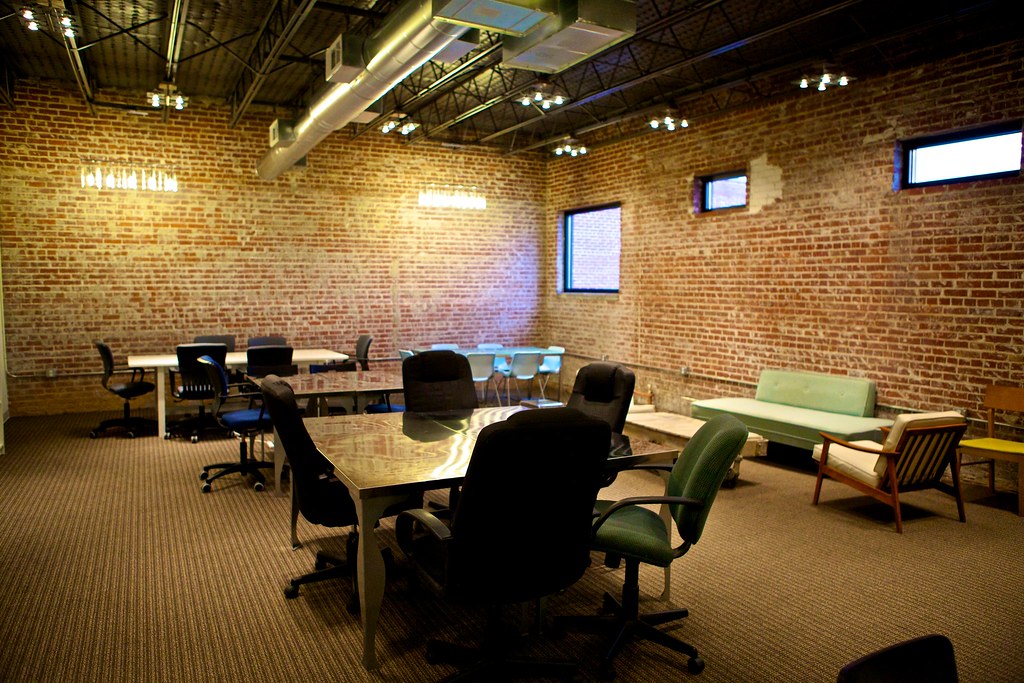
Forge Bellwater, the Foundry Row startup incubator that has largely built its reputation on biotech spinouts, will use a $1.8 million state grant announced Wednesday to launch a dedicated green-energy startup track, an effort to diversify a local startup scene that officials say has leaned too heavily on a single industry.
The three-year grant, awarded through the state’s economic development office as part of a broader clean-energy manufacturing initiative, will fund dedicated lab and workshop space at Forge Bellwater along with a mentorship program connecting early-stage founders with established manufacturers, including Bellwater Turbine Works. Forge Bellwater Director Priyanka Suresh said the incubator has fielded steady inquiries from green-energy entrepreneurs over the years but lacked the specialized equipment and manufacturing expertise to support them the way it supports biotech founders.
Diversifying beyond a single industry
“We’ve built a genuinely strong biotech pipeline here, and that’s not an accident, that’s Kincaid’s tech-transfer office and Kestrel’s success feeding each other,” Suresh said. “But if biotech is the only thing this building produces, we’re one bad funding cycle away from the whole incubator’s momentum stalling. This grant lets us build a second engine.” She said the incubator expects to onboard its first cohort of green-energy startups within six months, with a particular focus on companies working on grid storage, turbine component design and manufacturing efficiency tools.
Mayor Renata Ibarra, who has framed green-energy manufacturing alongside biotech as a pillar of the city’s post-industrial recovery, called the grant validation of the state’s broader confidence in Bellwater’s manufacturing base. “Turbine Works proved this city still knows how to build things with its hands,” Ibarra said. “This grant is betting that same expertise can produce founders, not just factory workers.”
If biotech is the only thing this building produces, we’re one bad funding cycle away from the whole incubator’s momentum stalling. This grant lets us build a second engine.
Priyanka Suresh, Director, Forge Bellwater
Skepticism from within the incubator
Not everyone inside Forge Bellwater is convinced the pivot will pay off as quickly as the biotech track did. Marcus Feld, a founder whose water-filtration startup has occupied space at the incubator for three years, said green-energy hardware startups face a fundamentally different, and often slower, path to revenue than software or biotech ventures. “Biotech companies can raise huge rounds on the promise of a future drug. Hardware startups mostly have to actually build the thing and sell it before anyone takes them seriously,” Feld said. “That’s a much longer runway, and I’m not sure three years of grant funding is enough time to prove it out.”
Suresh acknowledged the concern but said the incubator’s mentorship partnership with Bellwater Turbine Works, whose founders and senior engineers will hold regular office hours for the new cohort, is meant specifically to shorten that runway by connecting early-stage founders with manufacturers who already have supply-chain relationships and testing facilities. “We’re not asking these founders to build a factory from scratch,” Suresh said. “We’re asking Turbine Works to open its doors a little and let people prototype faster than they could on their own.”
Dr. Samuel Iyer, the Bellwater State University labor economist who has tracked the region’s shift from legacy manufacturing to newer industries, said a successful green-energy startup track could help address a persistent complaint from workforce advocates: that the city’s economic recovery has disproportionately rewarded workers with advanced degrees. “Hardware and manufacturing startups, if they take off, tend to create more of the mid-skill technician and assembly jobs that this city has a much deeper bench of workers for compared to biotech’s lab-science roles,” Iyer said.
Suresh said the incubator plans to prioritize applicants with connections to Bellwater State’s clean-energy academic programs and the community college’s workforce-training partnerships, though she said the track will be open to founders from outside the region as well. She said Forge Bellwater has already reserved roughly 6,000 square feet of workshop space, formerly used for overflow biotech storage, for the new program.
- State grant totals $1.8 million over three years
- New track includes mentorship from Bellwater Turbine Works
- First cohort of green-energy startups expected within six months
- Roughly 6,000 square feet of workshop space reserved for the program
Feld said he plans to watch the new cohort closely, in part because he hopes a successful hardware track could eventually make it easier for founders like him to find manufacturing partners locally rather than overseas. “If this works, it’s good for everybody in this building, not just the green-energy folks,” he said. “I just don’t want anyone to be surprised when the first couple years look a lot slower than biotech’s did.”
Suresh said the incubator has also begun reaching out to Bellwater State University’s clean-energy faculty about potential faculty-led spinouts, modeled loosely on Kincaid’s biotech tech-transfer approach, though she cautioned those conversations remain preliminary. Council Member Denise Okafor, who represents West Bellwater and has pushed for closer ties between the community college and green-energy manufacturers, said she hopes the new track eventually draws founders from her district’s workforce-training programs rather than exclusively from university labs. “The skills gap conversation in this city always seems to center on biotech,” Okafor said. “I want to make sure whatever gets built here also has a lane for the welders and technicians already living in West Bellwater.”