
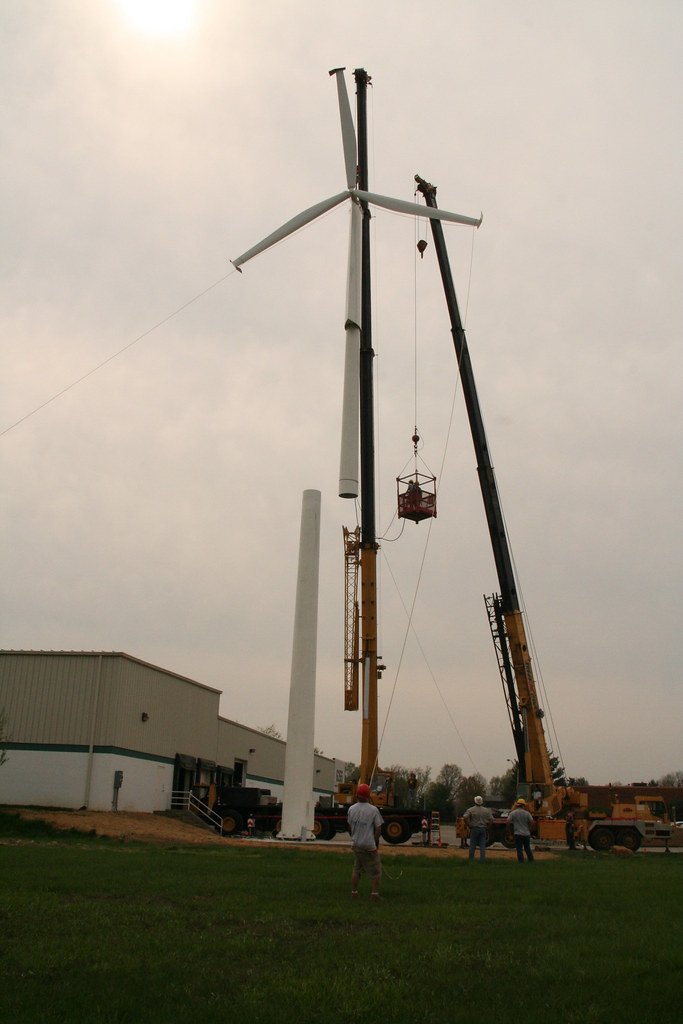
The West Bellwater Industrial Park will add roughly 40 acres of new manufacturing space after securing a $28 million state financing package, city officials announced Tuesday, clearing the way for a project developers say could bring several green-energy manufacturers to the site over the next three years.
The financing package, split between a $19 million low-interest state infrastructure loan and a $9 million workforce-development grant, will pay for road, water and electrical upgrades on land adjacent to the existing park, which is already home to Bellwater Turbine Works and a handful of smaller suppliers. City Manager Marcus Whitfield said the expansion has been a priority since Turbine Works began reporting it was turning away potential suppliers for lack of available sites nearby.
“We kept hearing the same thing from site-selection consultants: they liked Bellwater, but there was nowhere left to put a 100,000-square-foot manufacturing building,” Whitfield said. “This gives us that room, finally.”
A win years in the making for West Bellwater
Council Member Denise Okafor, who represents West Bellwater, said she’d pushed for state financing since her first term, arguing the neighborhood had been treated as an afterthought while Foundry Row absorbed most of the attention and investment tied to the city’s economic turnaround. “For a long time it felt like West Bellwater got the community college’s second campus and not much else,” Okafor said. “This is the first time in a decade that state dollars have come here first, not as leftovers.”
Okafor said the expansion is projected to create between 300 and 450 direct manufacturing jobs once fully built out, based on estimates from the state Department of Commerce, though she cautioned that timeline depends on how quickly the city can attract tenants once the infrastructure work is finished, expected to take 18 months.
Carol Antinelli, a spokeswoman for Bellwater Turbine Works, said the company has already had informal conversations with two component suppliers interested in the expanded site, though she declined to name them before deals are finalized. “Every supplier we bring closer means shorter shipping times and lower costs for us,” Antinelli said. “Right now some of our components travel four states before they reach our assembly line. That’s not sustainable long-term.”
For a long time it felt like West Bellwater got the community college’s second campus and not much else. This is the first time in a decade that state dollars have come here first, not as leftovers.
Denise Okafor, City Council Member, District 6
Workforce grant tied to a familiar problem
The $9 million workforce-development portion of the package will flow through Bellwater Community College’s West Bellwater campus, which has expanded its wind-turbine and battery-manufacturing technician programs in recent years through a workforce partnership Bellwater State University signed with Bellwater Turbine Works. Dr. Ramon Delgado, the community college’s president, said the funding will let the campus add a second training cohort each year and purchase updated equipment to match what manufacturers are actually installing on their floors.
“We can build the building. We can bring in the machines,” Delgado said. “None of it works if we can’t also produce the workforce to run it. That’s been the missing piece every time one of these announcements gets made.” Delgado said roughly 60 students are currently enrolled in the campus’s turbine and battery-technician tracks, a figure he expects to double within two years if the new funding materializes as planned.
The skills gap has been a persistent theme in the city’s manufacturing and biotech growth alike. Dr. Samuel Iyer, the Bellwater State labor economist frequently consulted on the subject, said West Bellwater’s expansion illustrates both the opportunity and the risk. “You can build all the industrial parks you want,” Iyer said. “If the training pipeline doesn’t scale at the same pace, you end up importing workers from outside the region, which is fine for the companies but does less for the neighborhoods these projects are supposed to lift up.”
Whitfield said the city has built training-pipeline benchmarks into the site’s marketing to prospective tenants, requiring companies that locate there to partner with the community college on apprenticeships as a condition of any additional city-level incentives, similar to the apprenticeship program Bellwater Turbine Works launched to fill its own open jobs. He said the city is not, however, requiring it as a condition of the state financing itself, since that money flows through a state program with its own separate rules.
Okafor said she expects the first phase of infrastructure work, covering roughly half the new acreage, to break ground within the next two months, with the remaining phase following once the state releases a second tranche of funding contingent on the city meeting reporting requirements on job creation. “I’ve learned not to celebrate too early with these state deals,” she said. “But this is as close to a done deal as West Bellwater has gotten in years, and I intend to hold everyone to the timeline.”
The expansion also revives a long-simmering debate over whether West Bellwater has enough housing and services to support the workforce the park is meant to attract. Okafor said she’s already fielded questions from residents worried the neighborhood’s roads and schools weren’t built for hundreds of new manufacturing jobs arriving at once, particularly if workers commute in from outside the district rather than moving to West Bellwater itself. “I want those jobs to go to people who already live here whenever possible,” she said. “That’s a big part of why the workforce grant matters as much as the infrastructure money does.”
Whitfield said the city’s economic development office will track how many of the eventual jobs go to Wentworth County residents versus commuters from outside the metro area, publishing the figures alongside the job-creation benchmarks the state financing already requires. “If this expansion just becomes a place where out-of-town workers park their cars and go home, we haven’t solved the problem we set out to solve,” he said. “The whole point was to build something for the people who live here.”