
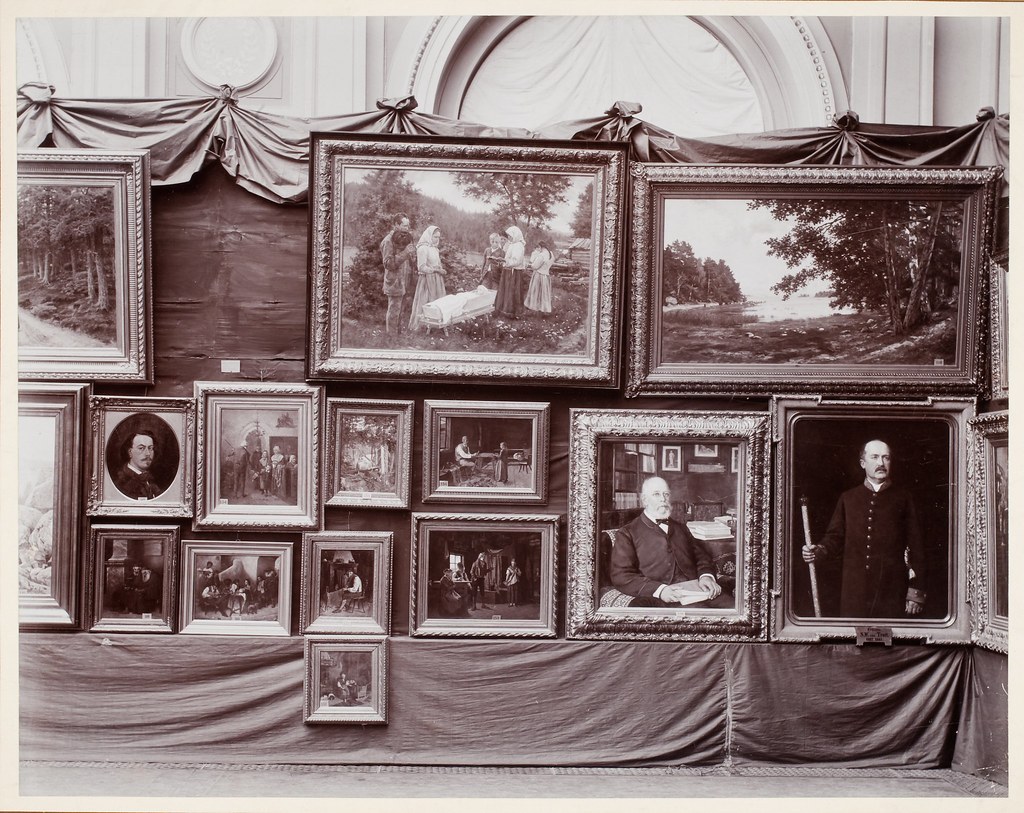
The Bellwater Museum of Art will waive its $15 admission fee for Lowertown residents on the first Sunday of every month starting next month, a one-year pilot program organizers hope will draw a neighborhood that has historically made up a small fraction of the museum's visitors.
Museum Executive Director Miriam Hastings said the idea for the Free Sunday program grew out of visitor data the museum had been sitting on for years without acting on. Surveys distributed at the front desk over the past three years consistently showed that fewer than 5 percent of visitors listed a Lowertown ZIP code, even though the neighborhood accounts for roughly 15 percent of the city’s population. “We could have kept telling ourselves a story about general disinterest in the arts,” Hastings said. “But when you actually break down who is and isn’t walking through that door, the honest answer is that a fifteen-dollar ticket is a real barrier for a lot of Lowertown families, and we hadn’t done much to address that.”
How the pilot works
Under the program, Lowertown residents will be able to present a driver’s license, utility bill or other proof of address at the front desk on the first Sunday of each month for free entry, including to the museum’s ticketed special exhibitions. The pilot is funded by a $50,000 grant from a local foundation and is set to run for one year, after which Hastings said the museum will decide whether to seek permanent funding based on attendance data.
Museum curator Priscilla Adeyemi, who has spent much of the past two years working on the riverfront mural project along the Kestrel River Greenway, said the free-admission program grew partly out of conversations she had with Lowertown residents during that project. “People would tell me they’d walked past the murals a hundred times but never once been inside the museum that helped fund them,” Adeyemi said. “That’s not a coincidence. That’s a gap we built, and it’s on us to close it.”
A mixed reception from the neighborhood
City Council Member Terrence Boudreaux, who represents Lowertown, welcomed the program but said he wants to see the museum go further, including offering transportation assistance for residents without reliable access to downtown. “A free ticket doesn’t help you much if you don’t have an easy way to get there and back,” Boudreaux said. “I’d like to see them pair this with some kind of shuttle or transit partnership before we call it a full success.” Hastings said the museum is exploring a partnership with the city’s forthcoming bus rapid transit corridor, which is slated to add stops within walking distance of the museum, though that expansion remains years away.
Not every Lowertown resident is convinced the program addresses the real issue. Denise Okonkwo-Marsh, the Lowertown Tenant Alliance organizer who has spent much of the past year focused on the Foundry District Lofts affordable-housing lawsuit, said she appreciates the gesture but sees it as a modest one against a much larger backdrop of disinvestment. “I’m glad the museum is doing something,” Okonkwo-Marsh said. “But when the same conversations keep happening about affordable units and transit promises that take years to materialize, a free museum ticket one Sunday a month can start to feel like the easy problem to solve instead of the hard ones.”
I don’t want this to be the museum’s one good headline for the year while the harder questions about who gets to afford living near it go unanswered. But I’d rather see them try something imperfect than do nothing at all.
Denise Okonkwo-Marsh, Lowertown Tenant Alliance
Hastings said she does not view the program as a substitute for addressing broader neighborhood disparities, but as a starting point within the museum’s own control. “We can’t fix a transit line or a housing lawsuit from inside this building,” she said. “What we can do is stop charging our neighbors fifteen dollars to see art their own tax dollars, through arts grants, helped fund. That’s a decision entirely within our power to make.”
The museum plans to pair the free days with programming aimed specifically at first-time visitors, including docent-led introductory tours and children’s activities timed to the free Sundays. Adeyemi said she is also planning a small exhibit drawn from the museum’s industrial-history collection to run alongside the launch, hoping to connect the museum’s permanent collection to Lowertown’s own manufacturing-era roots.
- Free admission for verified Lowertown residents on the first Sunday of each month, for a one-year pilot
- Funded by a $50,000 one-time grant from a local foundation
- Regular adult admission remains $15 on all other days
Hastings said the museum will track attendance and visitor ZIP codes throughout the pilot and present the results to its board before deciding whether to seek permanent funding, a process she expects to unfold alongside the museum’s planned new industrial-history wing, which is intended in part to tell stories closer to the neighborhoods the museum is now trying harder to reach.