
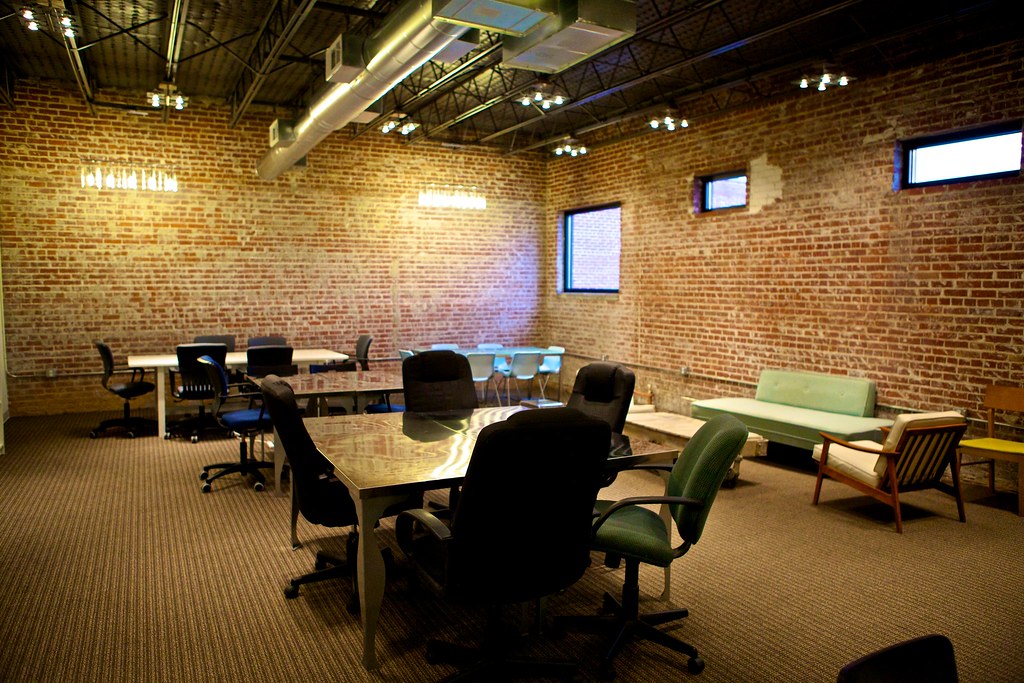
Forge Bellwater has spent nearly a decade incubating biotech and green-energy startups. This month, it welcomed something new: a company built around machine-learning software rather than lab science, spun out of a Kincaid University computer science lab that had been quietly developing the technology for three years.
The company, called Meridian Sequence, grew out of a research project in the computer science department at Kincaid University originally built to help biotech researchers, including those at Dr. Wei-Lin Tan’s gene-therapy lab, sort and analyze large genetic sequencing datasets more efficiently. Co-founder Dr. Rachel Osei, who led the research project as a Kincaid faculty member before taking leave to run the company full time, said the technology’s potential uses expanded well beyond its original biotech application once outside researchers began asking to license it.
From a side project to a standalone company
“We built this specifically to help biotech labs process sequencing data faster, and it turns out the underlying pattern-matching approach is useful for a lot of dataset problems that have nothing to do with genetics,” Osei said. “That’s when Kincaid’s tech-transfer office and I started talking seriously about whether this should be a company instead of just a tool sitting inside one lab.” Osei said the company has already signed early licensing agreements with two out-of-state research institutions and is in discussions with a Bellwater biotech firm she declined to name.
Forge Bellwater Director Priyanka Suresh said the incubator had actively courted a software or AI-focused tenant for several years, partly to diversify its portfolio and partly because she believed Kincaid’s research strength extended well beyond biotech. “We kept getting asked why an incubator sitting three miles from a university with a strong computer science department didn’t have a single software company in the building,” Suresh said. “Meridian is proof that talent pipeline was always there. We just hadn’t found the right project yet.”
We kept getting asked why an incubator three miles from a university with a strong computer science department didn’t have a single software company in the building. Meridian is proof that talent pipeline was always there.
Priyanka Suresh, Director, Forge Bellwater
Kincaid’s tech-transfer office looks for a second win
Kincaid President Dr. Howard Faircloth, who has pushed the university’s technology-transfer office to spin out more faculty research as standalone companies following Kestrel Biologics’ successful funding round, said Meridian Sequence represents the office’s first attempt to apply that model outside biotech. “We built the technology-transfer infrastructure around Kestrel’s example, but the whole point was proving it could work for other kinds of research too,” Faircloth said. “Rachel’s company is the first real test of that.”
Not every observer is convinced Foundry Row’s biotech-oriented ecosystem is the right home for an AI company. Marcus Feld, a fellow Forge Bellwater tenant whose water-filtration hardware startup has occupied space in the incubator for three years, said he worries the building’s culture and mentorship networks remain oriented almost entirely around biotech and, more recently, green-energy manufacturing. “Nobody in this building really knows how to help a software company negotiate a licensing deal or think about a subscription pricing model,” Feld said. “Rachel’s going to be figuring a lot of that out without the kind of built-in peer network the biotech founders have.”
Osei acknowledged the concern but said she has found value in Forge Bellwater’s proximity to biotech customers even if the incubator’s formal mentorship programs remain biotech-focused. “Half my potential customers are literally in this building,” she said. “I’d rather be here figuring out the software-specific stuff on my own than somewhere else without easy access to the exact researchers who might want to license this.”
Suresh said the incubator plans to use Meridian Sequence’s arrival to begin building out software-specific mentorship resources, including recruiting mentors with venture capital and software licensing experience, in anticipation of attracting additional AI and software startups. She said Forge Bellwater has fielded at least two additional inquiries from software founders since Meridian’s move was announced internally.
- Meridian Sequence spun out of a Kincaid computer science research project
- Technology originally built to help sort genetic sequencing data
- Company has signed early licensing agreements with two research institutions
- First AI-focused tenant in Forge Bellwater’s history
Osei said she expects the company to remain small for its first year, focused on refining its licensing model before considering outside investment. “I’m not trying to be the next Kestrel overnight,” she said. “I just want to prove this building can hold more than one kind of company, because I don’t think biotech and green energy are the only things this city’s research base is capable of producing.”
Faircloth said Kincaid’s tech-transfer office is now reviewing two additional faculty research projects, one in the computer science department and one in materials engineering, for potential spinout status, though he declined to provide further detail before any formal announcement. He said the university’s broader goal is to reduce how often promising research leaves Bellwater entirely once a faculty member decides to commercialize it. “We used to lose people to the coasts the moment they had something worth building a company around,” Faircloth said. “Every spinout we keep here, in any field, chips away at that pattern a little more.”