
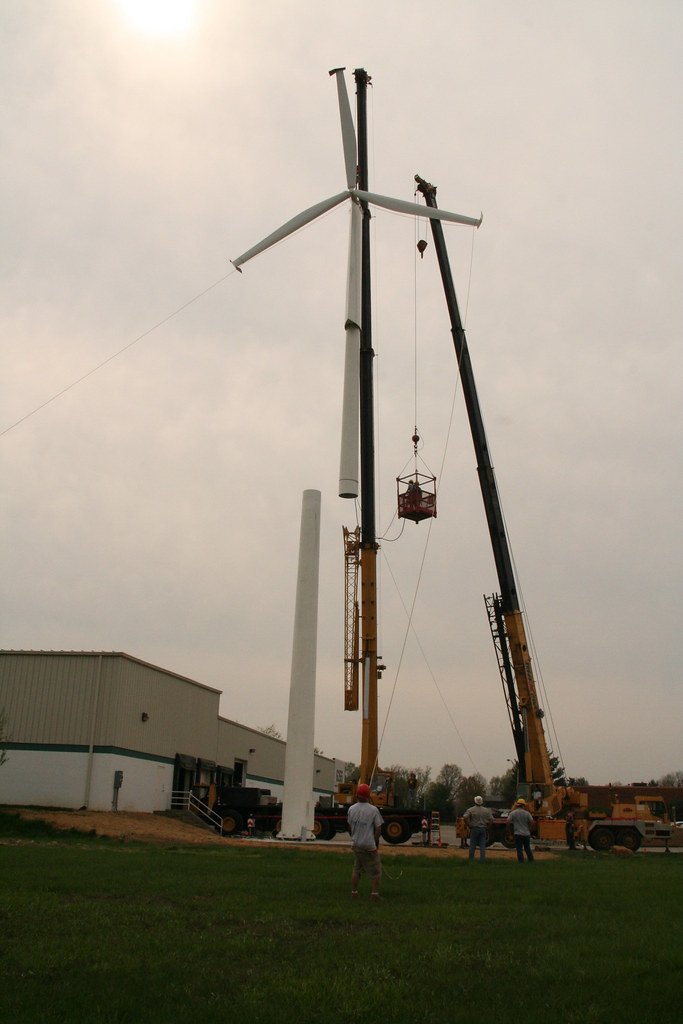
Bellwater Turbine Works has signed a $92 million contract to supply components for an offshore wind project off the state's coast, the largest order in the West Bellwater manufacturer's history and one executives say will require dozens of new hires.
Bellwater Turbine Works has signed a contract to supply nacelle housings and tower sections for an offshore wind project being built off the state’s coast, the company announced Wednesday, in what executives called the largest single order in the West Bellwater manufacturer’s history. The contract, valued at roughly $92 million, will run over the next three years.
“We converted part of a steel plant to build turbine components because we bet the demand would eventually catch up to the capacity,” said Chief Executive Douglas Fenwick. “This is the order that proves the bet out.”
A former steel plant finds a new customer base
Bellwater Turbine Works occupies a converted section of a former steel plant in West Bellwater, where it has built land-based wind-turbine components for regional utilities since opening. Fenwick said the offshore contract, its first, required the company to retool part of its production line to meet the larger tolerances and corrosion-resistant coatings offshore components require.
Plant manager Marisol Vega said the retooling took nearly eight months and required the company to bring in specialized welding equipment it did not previously own. “Offshore components live in salt air for twenty-five years without anyone servicing them up close,” Vega said. “The margin for error is smaller than anything we’ve built before.”
This contract does not just keep our current workforce busy. It requires us to be a different, more precise company than we were two years ago, and we are still catching up to that on the hiring side.
Marisol Vega, Plant Manager, Bellwater Turbine Works
Hiring catches up slowly
Fenwick said the company expects to add 60 to 75 positions over the life of the contract, primarily welders, quality-control inspectors and heavy-equipment operators, a hiring need the company plans to address in part through a new apprenticeship program announced alongside the contract. He acknowledged the company has struggled in the past to fill specialized manufacturing roles despite steady local demand for the work.
Theresa Nakamura, executive director of the Bellwater Chamber of Commerce, called the contract “the kind of win this city needed to hear about,” noting that it validates years of public and private investment in retraining former factory workers for green-energy manufacturing. “This is a company that exists because a steel plant closed,” Nakamura said. “Watching it land a contract this size is exactly the story Bellwater has been trying to tell about itself since the factories left.”
Dr. Samuel Iyer, the Bellwater State University labor economist, cautioned that a single large contract, however significant, does not by itself close the skills gap that has slowed green-energy manufacturing’s growth in the region. “One contract can fund a lot of hiring intentions,” Iyer said. “Whether the company can actually find and train enough qualified welders in West Bellwater is a separate question, and it’s the one that has tripped up manufacturers here before.”
Fenwick said the company had considered subcontracting some of the offshore work to out-of-state suppliers to meet the contract’s early milestones but ultimately decided against it. “If we start outsourcing the hard parts the first time a big contract stretches us, we stop being the company this city bet on,” he said.
The contract’s first shipment of components is due within the year, with the bulk of production scheduled over the following two years as the offshore project’s turbines are installed in phases. Fenwick said the company is already in early discussions for a second offshore contract with a different developer, though he declined to name the client or discuss terms.
“Three years ago, nobody was calling us about offshore work,” Fenwick said. “Now we’re fielding calls we can’t all say yes to yet. That’s a good problem, but it’s still a problem, because it all comes back to whether we can hire fast enough.”
Vega said the company has begun cross-training some of its existing land-based turbine crew on the offshore specifications to bridge the gap while new hires work through training, a stopgap she said is sustainable “for a while, but not for three years.”
Fenwick said the company also had to secure a new state permit for the higher-tonnage cranes required to move the larger offshore components through its West Bellwater yard, a process that added roughly six weeks to the retooling timeline. “Nobody warns you that half of scaling up a factory is paperwork,” he said. “The welding is the part we actually knew how to do.”
The offshore developer, which Fenwick declined to name citing a confidentiality clause in the contract, is one of two companies building wind farms off the state’s coast under a state clean-energy procurement program. Fenwick said Bellwater Turbine Works had bid unsuccessfully for offshore work twice before losing to out-of-state suppliers with more established offshore track records, making this contract the company’s first successful bid in the category.
“We lost the first two bids because we couldn’t prove we’d done it before,” Fenwick said. “The only way to prove you can do something you’ve never done is to spend money getting ready for a contract you might not win. We did that twice and lost. This is the third time, and it worked.”
Nakamura said the chamber plans to highlight the contract in materials aimed at recruiting additional green-energy suppliers to West Bellwater, arguing that a proven offshore track record makes the area more attractive to component manufacturers who supply the same developers. “Winning this contract does more for this neighborhood than the jobs at this one plant,” she said. “It changes how the entire offshore wind industry thinks about sourcing components from Bellwater.”